

Trust and Technology: How AI Voice Automation is Building the Future of Financial Services Sales
Introduction: The New Frontier of Financial Sales
The financial services and fintech industry is built on a foundation of trust, relationships, and complex decision-making. From wealth management and insurance to lending and investment banking, the sales process has traditionally been a high-touch, human-centric endeavor. However, the digital transformation that has swept through every other aspect of our lives is now knocking on the door of the financial sales floor. Customers today expect a seamless, personalized, and on-demand experience, and the old ways of doing business are no longer sufficient. This chapter explores how AI voice automation is emerging as a critical technology for the financial services industry, helping firms to build trust, deepen relationships, and drive growth in a rapidly changing world.
Section 1: The State of Financial Services Sales: A Balancing Act of Tradition and Transformation
The financial services industry is at a pivotal moment. While the core principles of trust and relationship-building remain paramount, the industry is also facing a wave of disruption from fintech startups and changing customer expectations. The sales process is at the heart of this transformation, and it is here that the challenges are most acute.
The Financial Services Sales Cycle: A Journey of Trust
The financial services sales cycle is often long and complex, involving multiple touchpoints and a high degree of education. The key stages include:
- Prospecting and Lead Generation: Financial advisors, insurance agents, and loan officers spend a significant amount of time prospecting for new clients. This can involve cold calling, networking, and responding to inbound inquiries.
- Initial Consultation: The first meeting with a potential client is critical for building trust and understanding their needs. This is where the advisor has the opportunity to demonstrate their expertise and establish a personal connection.
- Proposal and Recommendation: Based on the initial consultation, the advisor will develop a proposal or recommendation. This can be a complex and time-consuming process, requiring a deep understanding of the client’s financial situation and goals.
- Closing and Onboarding: If the client accepts the proposal, the advisor will guide them through the closing and onboarding process. This can involve a significant amount of paperwork and administrative work.
The Pain Points of the Modern Financial Advisor
- The Time Sink of Prospecting: Financial advisors spend a disproportionate amount of their time on non-revenue-generating activities, such as prospecting and scheduling appointments. This leaves them with less time to focus on what they do best: providing financial advice and building relationships with clients.
- The Challenge of Lead Qualification: Not all leads are created equal. A significant amount of time can be wasted on prospects who are not a good fit for the firm’s services. The ability to quickly and efficiently qualify leads is a major challenge.
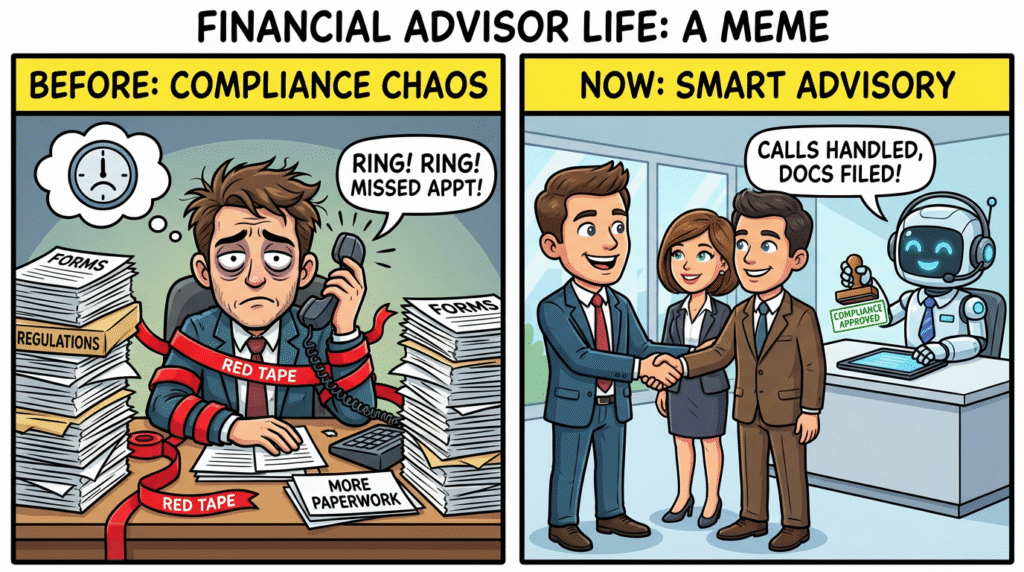
- The Burden of Compliance: The financial services industry is heavily regulated. Every communication with a client must be documented and compliant with a host of regulations. This can be a major administrative burden and can limit the use of certain technologies.
- The Pressure to Personalize: In an increasingly crowded market, personalization is key. Clients expect their financial advisor to understand their unique needs and provide them with tailored advice. However, providing a high level of personalization at scale can be a challenge.
Section 2: The Transformative Power of AI Voice Automation in Financial Services
AI voice automation is poised to revolutionize the financial services sales process, offering a powerful solution to the challenges outlined above. By automating many of the administrative and repetitive tasks that are currently handled by human advisors, AI can free them up to focus on higher-value activities.
How AI Voice Automation Works in a Regulated Industry
AI voice automation platforms can be designed to be fully compliant with financial regulations. All conversations can be recorded, transcribed, and archived for audit purposes. The AI agents can be programmed to follow a pre-approved script and to provide accurate and consistent information. This not only ensures compliance but also reduces the risk of human error.
The ROI of AI Voice Automation in Financial Services
The ROI of AI voice automation in the financial services industry can be substantial. By automating the top of the sales funnel, firms can:
- Increase Advisor Productivity: By freeing up advisors from the drudgery of prospecting and appointment setting, they can spend more time with clients and focus on revenue-generating activities.
- Improve Lead Conversion Rates: Instant follow-up and persistent nurturing can significantly increase the number of leads that convert into appointments.
- Enhance the Client Experience: A seamless and professional appointment booking process can create a positive first impression and set the stage for a long-term relationship.
- Reduce Compliance Risk: Automated and documented conversations can help to ensure compliance with industry regulations.
Section 3: The Competitive Landscape: How Fintech and Financial Leaders are Leveraging AI
The adoption of AI in financial services is accelerating, with both established players and fintech startups embracing the technology to gain a competitive edge.
- Wealthfront and Betterment: These robo-advisors have built their entire business model on the power of automation. They use sophisticated algorithms to provide automated, low-cost investment management services.
- Lemonade: The insurance-in-a-box startup uses an AI-powered chatbot to handle customer inquiries and process claims. This has allowed them to offer a faster, more efficient, and more user-friendly experience than traditional insurance companies.
- J.P. Morgan Chase: The banking giant is using AI to analyze vast amounts of data to identify new investment opportunities and to detect fraudulent activity.
Section 4: Your Implementation Roadmap: A Phased Approach to AI Adoption
For financial services firms, the adoption of AI voice automation should be a carefully planned and phased process. Here is a four-step roadmap to guide you:
- Start with a Compliance-First Mindset: Before you even think about implementing an AI solution, you need to have a clear understanding of the regulatory requirements. Work with your compliance team to develop a set of guidelines for the use of AI in client communications.
- Identify a Low-Risk Use Case: A good place to start is with a low-risk use case, such as appointment setting for existing clients or following up on inbound leads. This will allow you to test the technology and demonstrate its value without taking on unnecessary risk.
- Choose a Vendor with Financial Services Expertise: When choosing an AI voice automation platform, it is critical to choose a vendor that has experience working with financial services firms. They should have a deep understanding of the industry’s unique challenges and regulatory requirements.
- Monitor, Audit, and Adapt: Once you have implemented the platform, it is important to continuously monitor its performance and to conduct regular audits to ensure compliance. The world of AI is constantly evolving, and you will need to be prepared to adapt your strategy as the technology matures.
Section 5: The Future of Financial Sales: The Augmented Advisor
The future of financial sales is not about replacing human advisors with robots. It is about creating the “augmented advisor”—a human advisor who is empowered by the power of AI. In this future, AI will handle the administrative and repetitive tasks, freeing up the advisor to focus on what they do best: building relationships, providing strategic advice, and acting as a trusted guide for their clients.
Conclusion: Building Trust in a Digital Age
The financial services industry is at a critical juncture. The firms that can successfully navigate the transition to a digital-first world will be the ones that thrive in the years to come. AI voice automation is a powerful tool that can help financial services firms to not only survive but to thrive in this new environment. By embracing this technology, firms can build trust, deepen relationships, and deliver a superior client experience in a digital age
