

Driving Sales into Overdrive: How AI Voice Automation is Accelerating the Automotive and Dealership Industry
Introduction: The Fast Lane of Automotive Sales
The automotive and dealership industry is a high-octane environment where speed, efficiency, and customer experience are the keys to success. In a market driven by consumer demand, intense competition, and the constant evolution of technology, dealerships are under pressure to adapt or be left in the dust. The sales process, from the initial lead to the final handshake, is a critical component of this race. This chapter explores how AI voice automation is emerging as a high-performance engine for the automotive industry, helping dealerships to supercharge their sales processes, enhance the customer experience, and drive their businesses into the fast lane.
Section 1: The State of Automotive and Dealership Sales: A Road Full of Potholes
The automotive industry is at a crossroads. The rise of online car buying platforms, the shift to electric vehicles, and a new generation of tech-savvy consumers are all challenging the traditional dealership model. In this environment, the sales process is more important and more challenging than ever before.
The Car Buyer’s Journey: A Test of Patience
The car buyer’s journey is often a long and winding road. The key stages and their associated challenges include:
- Online Research and Lead Generation: The vast majority of car buyers begin their journey online, researching vehicles, comparing prices, and submitting inquiries to dealerships. The challenge for dealerships is to respond to these leads quickly and effectively, before they move on to a competitor.
- Initial Contact and Qualification: Once a lead is generated, a salesperson must make contact to answer their questions, qualify them as a serious buyer, and schedule a test drive. This is often a time-consuming and manual process.
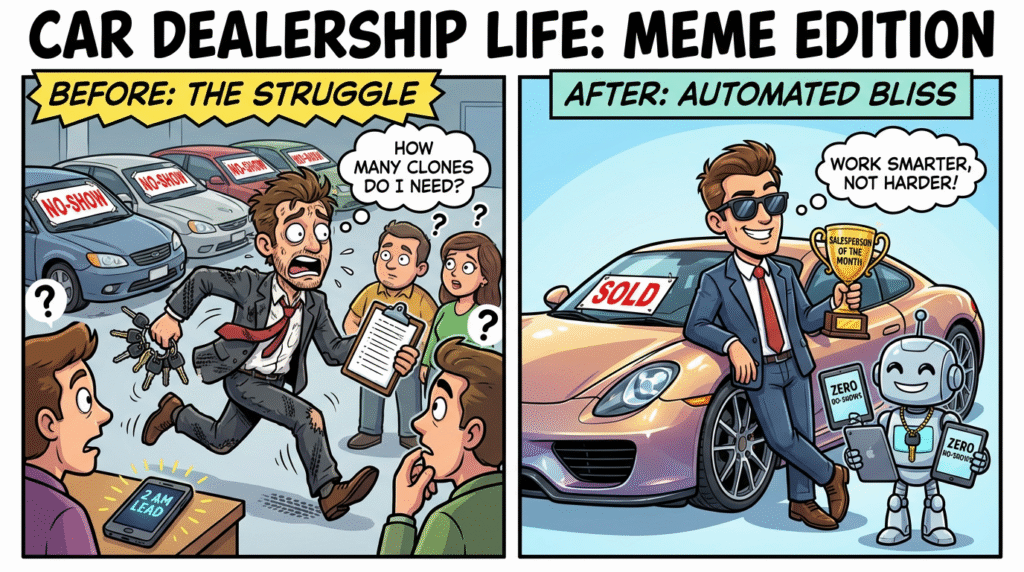
- The Test Drive: The test drive is a critical stage of the sales process. It is the dealership’s opportunity to showcase the vehicle and to build a relationship with the customer. However, test drive no-shows are a major problem, wasting the time of the salesperson and the resources of the dealership.
- Negotiation and Closing: The negotiation process can be a stressful and confrontational experience for both the customer and the salesperson. A lack of transparency and trust can easily lead to a lost sale.
The Pain Points of the Modern Car Salesperson
- The 24/7 Sales Cycle: Car buyers are shopping for vehicles at all hours of the day and night. If a dealership is not available to respond to a lead instantly, they risk losing that lead to a competitor.
- The High Cost of Lead Generation: Dealerships spend a significant amount of money on advertising and lead generation. If those leads are not converted into sales, it can be a major drain on profitability.
- The Frustration of Unqualified Leads: A significant amount of a salesperson’s time can be wasted on leads who are not serious about buying a car. The ability to quickly and efficiently qualify leads is a major challenge.
- The Pressure to Hit Sales Targets: The automotive industry is a high-pressure environment, and salespeople are under constant pressure to hit their sales targets. This can lead to aggressive sales tactics and a poor customer experience.
Section 2: The Transformative Power of AI Voice Automation in the Automotive Industry
AI voice automation is providing a powerful solution to the challenges that have long plagued the automotive and dealership industry. By automating many of the time-consuming and repetitive tasks that are currently handled by human salespeople, AI can help them to be more efficient, more effective, and more customer-centric.
How AI Voice Automation Works in a Dealership Setting
AI voice automation platforms can be integrated with a dealership’s existing CRM and inventory management systems. The AI agents can be programmed to:
- Respond to Leads Instantly, 24/7: The AI agent can call a new lead within seconds of them submitting an inquiry on the dealership’s website or a third-party lead provider. This ensures that every lead is responded to instantly, even if it is in the middle of the night.
- Qualify Leads: The AI agent can ask a series of qualifying questions to determine if the lead is a serious buyer. This can include questions about their budget, their trade-in, and their timeline for purchasing a vehicle.
- Schedule Test Drives: The AI agent can access the dealership’s calendar and schedule test drives in real-time. It can also send automated reminders to the customer to reduce the likelihood of a no-show.
- Answer Frequently Asked Questions: The AI agent can be trained to answer common questions about a vehicle, such as the features, the fuel economy, and the warranty. This frees up the salesperson to focus on more complex and strategic questions.
The ROI of AI Voice Automation in the Automotive Industry
The ROI of AI voice automation in the automotive industry can be significant. By automating the top of the sales funnel, dealerships can:
- Increase Sales: By responding to leads instantly and qualifying them effectively, AI can help to increase the number of appointments that are set and the number of cars that are sold.
- Reduce Cost Per Sale: By automating tasks that are currently handled by human salespeople, dealerships can reduce their cost per sale.
- Improve Customer Satisfaction: A seamless and professional communication process can create a positive first impression and lead to higher levels of customer satisfaction.
- Increase Salesperson Productivity: By freeing up salespeople from administrative tasks, they can focus on what they do best: building relationships and closing deals.
Section 3: The Competitive Landscape: How Automotive Innovators are Embracing AI
The automotive industry is on the verge of a major technological disruption, and a new generation of forward-thinking dealerships and automotive companies is embracing AI to gain a competitive edge.
- Carvana: The online used car retailer has built its entire business model on the power of technology. They use AI to determine the value of a trade-in, to recommend vehicles to customers, and to provide a seamless and transparent online car buying experience.
- Tesla: The electric vehicle manufacturer has been a pioneer in the use of technology to transform the automotive industry. They have a direct-to-consumer sales model that is heavily reliant on technology, and they are using AI to develop self-driving cars.
- AutoNation: The largest automotive retailer in the United States has invested heavily in technology to improve the customer experience. They have implemented a digital storefront that allows customers to complete much of the car buying process online, and they are using AI to provide a more personalized and efficient service experience.
Section 4: Your Implementation Roadmap: A High-Performance Guide to AI Adoption
For automotive dealerships, the implementation of AI voice automation can be a straightforward and cost-effective process. Here is a four-step roadmap to guide you:
- Integrate with Your Lead Sources: The first step is to choose an AI voice automation platform that can be seamlessly integrated with your existing lead sources, such as your website, your CRM, and your third-party lead providers. This will ensure that every lead is responded to instantly.
- Start with a Specific Brand or Department: It is often best to start with a specific brand or department, such as your new car sales department or your used car sales department. This will allow you to test the platform and demonstrate its value before rolling it out to the entire dealership.
- Customize the AI Agent to Your Dealership’s Brand: The AI agent should be a reflection of your dealership’s brand and culture. Work with the platform provider to customize the agent’s voice, tone, and script to ensure a consistent and professional experience for your customers.
- Train Your Sales Team to Work with the AI Agent: The AI agent is not a replacement for your sales team; it is a tool to help them be more effective. It is important to train your sales team on how to work with the AI agent and how to leverage the information it provides.
Section 5: The Future of Automotive Sales: The Connected Car Meets the Connected Customer
The future of automotive sales is a world where the connected car is seamlessly connected to the connected customer. In this future, AI will provide dealerships with real-time insights into the customer’s needs and the vehicle’s performance. This will enable a level of personalization and proactive service that is not possible today.
Conclusion: The Green Flag for Growth
The automotive and dealership industry is in the midst of a major transformation. The dealerships that can successfully leverage technology to transform their sales processes will be the ones that take the checkered flag in the years to come. AI voice automation is a powerful tool that can help you to do just that. By embracing this technology, you can build a more efficient, more effective, and more customer-centric dealership, and wave the green flag for growth.
