
The Enrollment Engine: How AI Voice Automation is Powering Growth in Education and EdTech
Introduction: The Competitive Classroom of the 21st Century
The education and EdTech sector is undergoing a period of unprecedented change. The rise of online learning, the increasing competition for students, and the growing demand for a more personalized and engaging learning experience are all putting pressure on traditional educational institutions and creating new opportunities for innovative EdTech companies. In this environment, the student recruitment and enrollment process has become more critical and more challenging than ever before. This chapter explores how AI voice automation is emerging as a powerful tool for the education and EdTech sector, helping institutions to streamline their enrollment processes, engage with prospective students more effectively, and build a more sustainable and successful future.
Section 1: The State of Education and EdTech Sales: A Race for Enrollment
The education and EdTech market is a diverse and dynamic landscape, encompassing everything from traditional universities and K-12 schools to online course providers and corporate training platforms. However, they all share a common goal: to attract and enroll students. The sales process in this industry is a unique blend of marketing, admissions, and relationship-building.
The Student Enrollment Journey: A Path of Discovery and Decision
The student enrollment journey is a multi-stage process that can take weeks, months, or even years. The key stages and their associated challenges include:
- Inquiry and Lead Generation: Prospective students discover educational programs through a variety of channels, including online search, social media, and school fairs. The challenge is to capture their interest and to encourage them to take the next step.
- Information and Nurturing: Once a prospective student has expressed interest, they need to be nurtured with relevant information about the program, the institution, and the application process. This is often a time-consuming and manual process.
- Application and Admission: The application and admission process can be complex and daunting for prospective students. A lack of clear communication and support can lead to a high rate of application abandonment.
- Enrollment and Onboarding: Once a student has been accepted, they need to be guided through the enrollment and onboarding process. This can involve everything from registering for classes to securing financial aid.
The Pain Points of the Modern Admissions Team
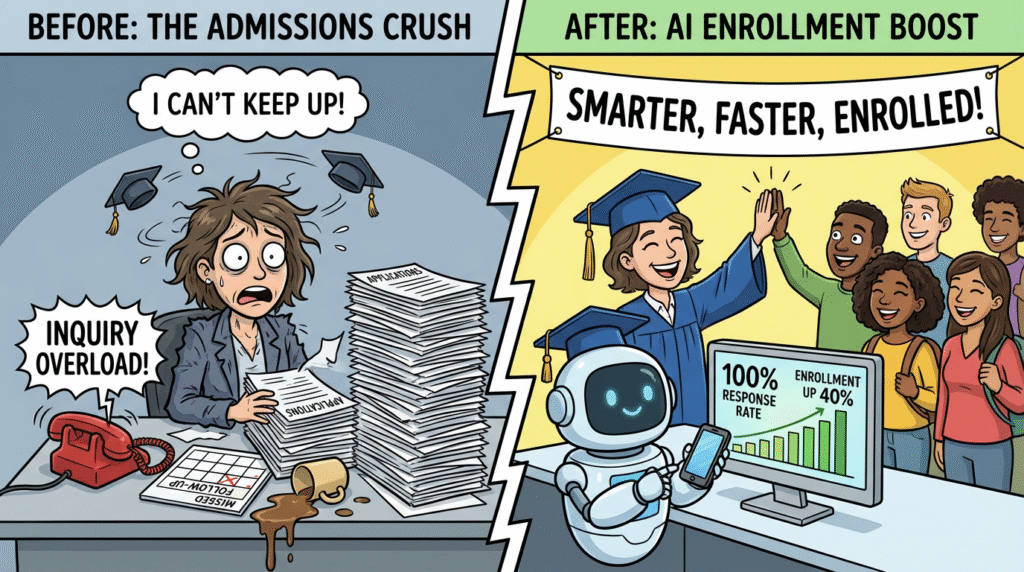
- The High Volume of Inquiries: Admissions teams are often inundated with a high volume of inquiries from prospective students. It can be a major challenge to respond to all of these inquiries in a timely and personalized manner.
- The Seasonal Nature of Enrollment: The enrollment process is often highly seasonal, with peaks in the spring and fall. This can make it difficult to staff the admissions team appropriately.
- The Challenge of Student Engagement: In a world of digital distractions, it can be difficult to keep prospective students engaged throughout the long enrollment process.
- The Need for a Personalized Approach: Today’s students expect a personalized and supportive experience. A one-size-fits-all approach to student recruitment is no longer effective.
Section 2: The Transformative Power of AI Voice Automation in Education and EdTech
AI voice automation is providing a powerful solution to the challenges that have long plagued the student recruitment and enrollment process. By automating many of the administrative and repetitive tasks that are currently handled by human admissions counselors, AI can help them to be more efficient, more effective, and more student-centric.
How AI Voice Automation Works in an Education and EdTech Setting
AI voice automation platforms can be integrated with a school’s or company’s existing student information system (SIS) and CRM. The AI agents can be programmed to:
- Respond to Inquiries 24/7: The AI agent can handle inbound inquiries from prospective students at any time of the day or night. This ensures that every lead is responded to in a timely manner.
- Qualify Leads: The AI agent can ask a series of qualifying questions to determine if a prospective student is a good fit for the program. This can include questions about their academic background, their career goals, and their financial situation.
- Schedule Campus Tours and Information Sessions: The AI agent can access the admissions team’s calendar and schedule campus tours, information sessions, and one-on-one meetings with admissions counselors.
- Provide Application Support: The AI agent can guide prospective students through the application process, answer frequently asked questions, and provide them with the information they need to submit a successful application.
The ROI of AI Voice Automation in Education and EdTech
The ROI of AI voice automation in the education and EdTech sector can be measured in terms of both enrollment numbers and student satisfaction. By automating the top of the enrollment funnel, institutions can:
- Increase Enrollment: By responding to leads instantly and nurturing them effectively, AI can help to increase the number of students who enroll in the program.
- Reduce Cost Per Enrollment: By automating tasks that are currently handled by human admissions counselors, institutions can reduce their cost per enrollment.
- Improve Student Satisfaction: A seamless and supportive enrollment process can create a positive first impression and lead to higher levels of student satisfaction.
- Free Up Admissions Counselors to Focus on High-Value Activities: By freeing up admissions counselors from administrative tasks, they can focus on what they do best: building relationships with prospective students and helping them to make the right decision.
Section 3: The Competitive Landscape: How Education and EdTech Innovators are Embracing AI
The education and EdTech sector is ripe for disruption, and a new generation of innovative companies is embracing AI to gain a competitive edge.
- Coursera: The online learning platform is using AI to provide its learners with a more personalized and engaging learning experience. They are using AI to recommend courses, to provide feedback on assignments, and to connect learners with each other.
- Duolingo: The language-learning app has built its entire platform on the power of AI. They use AI to create personalized learning paths for each user and to provide them with instant feedback on their progress.
- Arizona State University: The university has been a pioneer in the use of technology to improve the student experience. They have implemented an AI-powered chatbot to answer student questions and to provide them with 24/7 support.
Section 4: Your Implementation Roadmap: A Student-Centric Approach to AI Adoption
For educational institutions and EdTech companies, the implementation of AI voice automation should be guided by a student-centric philosophy. Here is a four-step roadmap to help you get started:
- Map the Student Journey: The first step is to map the entire student journey, from initial inquiry to enrollment. This will help you to identify the biggest friction points and to prioritize the areas where AI can have the greatest impact.
- Choose a Platform That is Designed for Education: When choosing an AI voice automation platform, it is important to choose a platform that is designed for the unique needs of the education sector. The platform should be able to integrate with your existing SIS and CRM, and it should be compliant with all relevant privacy regulations (e.g., FERPA).
- Start with a Specific Program or Department: It is often best to start with a specific program or department. This will allow you to test the platform and demonstrate its value before rolling it out to the entire institution.
- Create a Seamless Handoff to a Human: The AI agent should be designed to handle the initial stages of the enrollment process. However, it is critical to ensure a seamless handoff to a human admissions counselor for more complex and personal conversations.
Section 5: The Future of Education and EdTech Sales: The AI-Powered Admissions Office
The future of education is a world where the admissions office is a highly efficient and student-centric operation, powered by AI. In this future, AI will handle the administrative and repetitive tasks, freeing up admissions counselors to act as strategic advisors and mentors to prospective students. We can expect to see the emergence of AI-powered “enrollment coaches” that will guide students through every step of the enrollment process, from choosing the right program to securing financial aid.
Conclusion: The Smartest Decision You’ll Ever Make
The education and EdTech sector is at a pivotal moment. The institutions and companies that can successfully leverage technology to transform their enrollment processes will be the ones that succeed in the years to come. AI voice automation is a powerful tool that can help you to do just that. By embracing this technology, you can build a more efficient, more effective, and more student-centric organization,centric organization,centric enrollment engine, enrollment engine, organization, and make the smart decision to invest in the future of education
