

The Patient Experience Revolution: How AI Voice Automation is Healing the Healthcare Sales and Scheduling Process
Introduction: The Critical Role of Communication in Healthcare
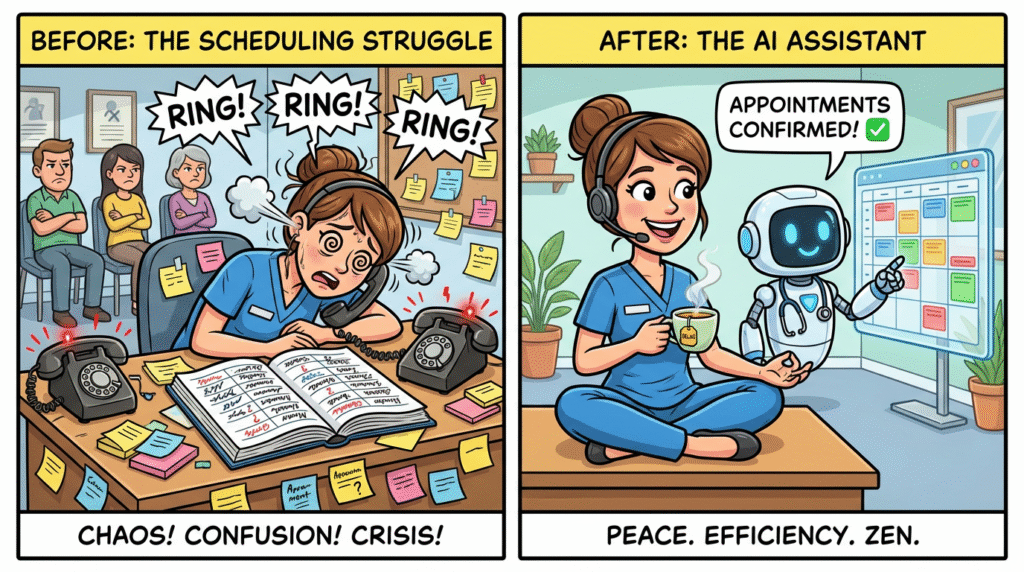
In the healthcare and medical services industry, the quality of communication is not just a matter of customer service; it can have a direct impact on patient outcomes. From the initial appointment scheduling to follow-up care, every interaction is an opportunity to build trust, reduce anxiety, and ensure that patients receive the care they need. However, the healthcare system is often bogged down by administrative inefficiencies, long wait times, and a lack of personalized communication. This chapter explores how AI voice automation is emerging as a powerful tool for healthcare providers, helping them to streamline their sales and scheduling processes, improve the patient experience, and ultimately, deliver better care.
Section 1: The State of Healthcare Sales and Scheduling: A System Under Strain
The healthcare industry is facing a perfect storm of challenges, from rising costs and an aging population to a shortage of healthcare professionals. These challenges are putting a significant strain on the system, and the sales and scheduling process is often where the cracks begin to show.
The Patient Journey: A Maze of Obstacles
The patient journey often begins with the simple act of scheduling an appointment. However, this seemingly simple task can be a frustrating and time-consuming experience. The key stages and their associated challenges include:
- Appointment Scheduling: Patients often have to navigate complex phone trees, wait on hold for long periods, and deal with limited appointment availability.
- Pre-Appointment Preparation: Patients may need to fill out paperwork, provide insurance information, and receive instructions before their appointment. This is often a manual and disjointed process.
- Appointment Reminders: Missed appointments are a major problem in healthcare, costing the industry billions of dollars each year. While many providers have implemented automated reminders, they are often generic and easily ignored.
- Post-Appointment Follow-Up: After an appointment, patients may need to schedule a follow-up visit, receive test results, or get answers to their questions. This is often a reactive process, with the burden on the patient to initiate the follow-up.
The Pain Points of the Modern Healthcare Provider
- The High Cost of No-Shows: Missed appointments are a major financial drain on healthcare providers. When a patient fails to show up for an appointment, it not only results in lost revenue but also wastes the time of the provider and staff.
- The Administrative Burden on Staff: Healthcare professionals are already stretched thin. The administrative burden of scheduling appointments, sending reminders, and handling follow-up calls takes them away from their primary responsibility: providing patient care.
- The Challenge of Patient Engagement: In an increasingly consumer-driven healthcare market, patient engagement is critical. Patients today expect a personalized and convenient experience, and they are not afraid to switch providers if their expectations are not met.
- The Complexity of B2B Medical Sales: For companies that sell medical devices, pharmaceuticals, and other healthcare products, the sales process can be long and complex, involving multiple stakeholders and a high degree of technical expertise.
Section 2: The Transformative Power of AI Voice Automation in Healthcare
AI voice automation is offering a powerful antidote to the administrative inefficiencies and communication gaps that plague the healthcare industry. By automating many of the routine and repetitive tasks that are currently handled by human staff, AI can help providers to improve the patient experience, reduce costs, and free up their staff to focus on what matters most: patient care.
How AI Voice Automation Works in a Healthcare Setting
AI voice automation platforms can be integrated with a provider’s existing electronic health record (EHR) and practice management systems. The AI agents can be programmed to:
- Schedule Appointments: The AI agent can answer inbound calls, access the provider’s schedule, and book appointments in real-time, 24/7.
- Send Smart Reminders: The AI agent can send personalized and interactive reminders to patients, allowing them to confirm, cancel, or reschedule their appointment with a simple voice command.
- Provide Pre-Appointment Instructions: The AI agent can provide patients with important information before their appointment, such as directions to the clinic, what to bring, and what to expect.
- Handle Post-Appointment Follow-Up: The AI agent can call patients after their appointment to check on their recovery, remind them to schedule a follow-up visit, and answer any questions they may have.
The ROI of AI Voice Automation in Healthcare
The ROI of AI voice automation in the healthcare industry can be measured in both financial and clinical terms. By automating the sales and scheduling process, providers can:
- Reduce No-Show Rates: Interactive and personalized reminders can significantly reduce the number of missed appointments.
- Increase Staff Productivity: By freeing up staff from the administrative burden of scheduling and follow-up, they can focus on higher-value activities.
- Improve Patient Satisfaction: A seamless and convenient scheduling process can lead to a more positive patient experience and increased patient loyalty.
- Enhance Patient Outcomes: By improving communication and ensuring that patients receive the follow-up care they need, AI can help to improve patient outcomes.
Section 3: The Competitive Landscape: How Healthcare Innovators are Embracing AI
The adoption of AI in healthcare is still in its early stages, but a growing number of innovative providers are embracing the technology to gain a competitive edge.
- Zocdoc: The online appointment booking platform has been a pioneer in using technology to simplify the patient experience. They have recently integrated AI into their platform to provide more personalized and intelligent recommendations.
- One Medical: The membership-based primary care provider has built its entire model on the concept of a seamless and technology-enabled patient experience. They use a combination of human and AI-powered communication to provide their members with on-demand access to care.
- Teladoc: The telehealth giant has been at the forefront of using technology to deliver virtual care. They are now using AI to help their physicians diagnose and treat patients more effectively.
Section 4: Your Implementation Roadmap: A Patient-Centric Approach to AI Adoption
For healthcare providers, the implementation of AI voice automation should be guided by a patient-centric philosophy. Here is a four-step roadmap to help you get started:
- Prioritize the Patient Experience: The primary goal of any AI implementation in healthcare should be to improve the patient experience. Start by identifying the biggest friction points in your current sales and scheduling process and focus on solving those first.
- Ensure HIPAA Compliance: The Health Insurance Portability and Accountability Act (HIPAA) sets the standard for protecting sensitive patient data. It is critical to choose an AI voice automation platform that is fully HIPAA compliant.
- Integrate with Your Existing Systems: To get the most out of your AI investment, it is important to choose a platform that can be seamlessly integrated with your existing EHR and practice management systems.
- Communicate Clearly with Your Patients: When you introduce a new AI-powered communication channel, it is important to be transparent with your patients. Let them know that they are interacting with an AI agent and provide them with the option to speak with a human if they prefer.
Section 5: The Future of Healthcare Sales and Scheduling: The AI-Powered Patient Journey
The future of healthcare is a world where the patient journey is seamless, personalized, and powered by AI. In this future, AI will not replace the human touch, but it will augment it, freeing up providers to focus on the complex and compassionate aspects of care. We can expect to see the emergence of AI-powered “digital health assistants” that will guide patients through every step of their healthcare journey, from scheduling their first appointment to managing their chronic conditions.
Conclusion: A Healthier Future for All
The healthcare industry is at a critical moment of transformation. The challenges are immense, but so are the opportunities. AI voice automation is a powerful tool that can help healthcare providers to not only survive but to thrive in this new environment. By embracing this technology, providers can create a more efficient, more personalized, and more patient-centric healthcare system—a healthier future for all.
