

Voice Analytics That Predict Customer Churn before It Happens
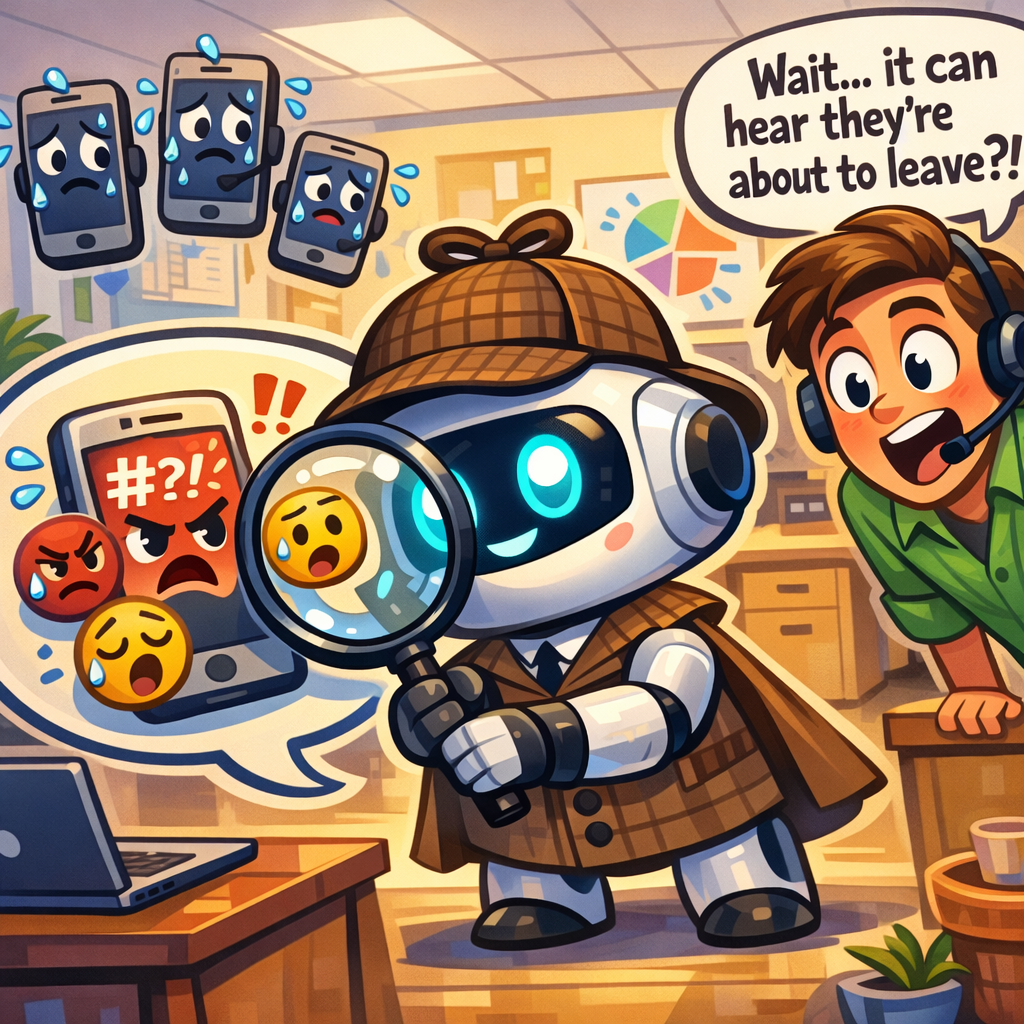
There’s a moment in every customer relationship when the tide begins to turn — a subtle hesitation in their voice, a sigh before they speak, a tone that’s just a bit sharper than it used to be. Most businesses don’t notice. They wait for the churn to materialize — the canceled subscription, the disengaged user the voicemail that never returns.
But what if your systems could hear before the decision has fully formed? What if every spoken word, every wobble of tone, every micro‑pause could become a signal — a quiet whisper of intent — and not just noise?
Welcome to the new frontier of voice analytics that predict customer churn before it happens — systems that don’t just listen to conversations, but understand the emotional and behavioral signals hidden within them. This is not science fiction. This is now — and it’s transforming how the best companies retain customers long before they think about leaving.
Let’s explore why voice analytics is no longer a luxury, how it predicts churn before it happens, and why every business should pay attention.
🎧 1. Conversation Is the Ultimate Source of Truth
Customers don’t churn because of a single price hike or missed feature.
They churn because their experience changed over time.
Every conversation contains clues about:
- frustration
- confusion
- hesitation
- loss of confidence
- unmet expectations
These clues are subtle. A pause here. A shift in tone there. A more clipped phrase. A reluctance to recommit.
Traditional analytics — clicks, usage logs, surveys — miss these signals. They view behavior. Voice analytics captures emotion, and emotion often precedes behavior.
If churn has a prelude, voice carries it.
🔍 2. Real-Time Emotional Signals: Not Words, But Meaning
A transcript of a conversation gives you words.
Voice analytics gives you:
- sentiment
- urgency
- frustration curves
- hesitation markers
- speech dynamics
Imagine two customers say the same sentence:
“I’m okay with this price.”
One sounds calm. The other sounds rushed, clipped, and exhaling sharply.
Text hears the same words.
Voice analytics hears:
- emotional context
- subtle frustration signals
- underlying intent
This is how systems can detect churn signals days — even weeks — before any measurable action occurs.
Call it:
✨ emotional early‑warning signals
✨ sentiment momentum
✨ tone change predictors
But all of these names describe the same truth:
The way a customer speaks often signals their future behavior more reliably than what they say.
📈 3. Patterns over Time — Voice as Behavioral Data
One isolated call is just data.
Two calls start a pattern.
Ten calls create a trend.
Voice analytics doesn’t just produce insights in a vacuum — it compares patterns over time.
For example:
- A customer’s tone becomes less positive over six calls
- The frequency of hesitation increases
- Mentions of support issues rise
- Sentiment drops before a renewal period
These aren’t coincidences. They are signals of shifting engagement.
And when you can quantify:
✔ change in emotional tone
✔ subtext beneath speech
✔ context transitions
you unlock a predictive engine that sees churn before it arrives.
🧠 4. Predictive Models That Learn From Humans
Voice analytics works through layers:
🎧 Acoustic Analysis
- tone
- pace
- pitch
- pauses
💬 Semantic Understanding
- words
- context
- topic transitions
📊 Temporal Patterns
- change over time
- variance across calls
- sentiment shifts
🔁 Behavioral Correlation
- past churn signals
- churn vs. retention profiles
- emotional drift linked to outcomes
Machine learning models ingest all this and learn what churn‑like patterns look like in human speech.
This is not guesswork — it’s pattern recognition at scale.
🛠️ 5. Turning Analytics into Action
Prediction is only powerful if you act on it.
When voice analytics flags a churn signal, businesses can:
🔥 Proactively reach out with tailored interventions
📌 Offer personalized incentives
📊 Alert success teams with sentiment context
📞 Route to senior agents with empathy training
💡 Adjust CSS/UX based on real feedback patterns
In other words:
Instead of reacting to churn,
you prevent it before it happens.
You not only save revenue — you also deepen customer trust.
❤️ 6. Emotion Matters More Than Ever
Churn isn’t a transactional event.
It’s an emotional decision.
Customers leave not because they can’t, but because they no longer feel understood.
Voice analytics listens for cues like:
- impatience
- disappointment
- reduced engagement
- passive agreement
- avoidance of commitment
When you can quantify these cues, you’re not tracking churn — you’re tracking emotional drift.
And emotion — unlike clicks or form entries — reveals intention.
📌 7. Human + AI: The Winning Combination
Voice analytics alone can flag patterns.
Human insights give them meaning.
A customer success manager equipped with:
✔ sentiment trends
✔ conversational context
✔ emotional drift scores
✔ predictive churn risk
✔ suggested interventions
…becomes unstoppable.
Customers don’t feel like a dataset.
They feel heard.
🧠 8. Contextual Churn Signals — Not Surface-Level Metrics
Voice analytics doesn’t stop at transcription. It dives into:
🔍 Contextual clues
- “I guess…”
- “I’m not sure…”
- “That’s weird.”
🧠 Semantic nuances
- Misalignment between product value and customer expectation
- Repeated explanations of the same point
- Increasing defensiveness in tone
📊 Response dynamics
- Longer pauses before response
- Shorter active engagement
- Escalation requests
These aren’t just linguistic trends — they are cognitive signals tied to churn behavior.
🌟 9. The ROI of Predicting Churn Before It Happens
Why does this matter so much?
Because acquiring a new customer is 5–25x more expensive than retaining one.
And churn isn’t random.
It’s predictable — if you listen.
When voice analytics equips you to see churn before it happens:
✔ Retention goes up
✔ Customer satisfaction rises
✔ Support costs fall
✔ Loyalty builds
✔ Revenue stabilizes
This is not futuristic — this is practical.
This is revenue intelligence hidden in plain sight.
✨ The Bottom Line
Traditional churn models look at what happened.
Voice analytics reveals what is happening right now.
And in the critical days leading up to churn, what customers say, how they say it, and how their emotional patterns shift are the richest signals of all.
This is not transcription.
This is interpretation.
Not just data.
But prediction.
Voice analytics doesn’t wait for churn to arrive.
It hears its footsteps — and warns you before the door closes.
That’s not automation.
That’s anticipation. And in an era where customer experience is brand experience — that’s the edge every business wants.
