

Why Hybrid Human + AI Call Systems Beat Fully Automated Ones Today
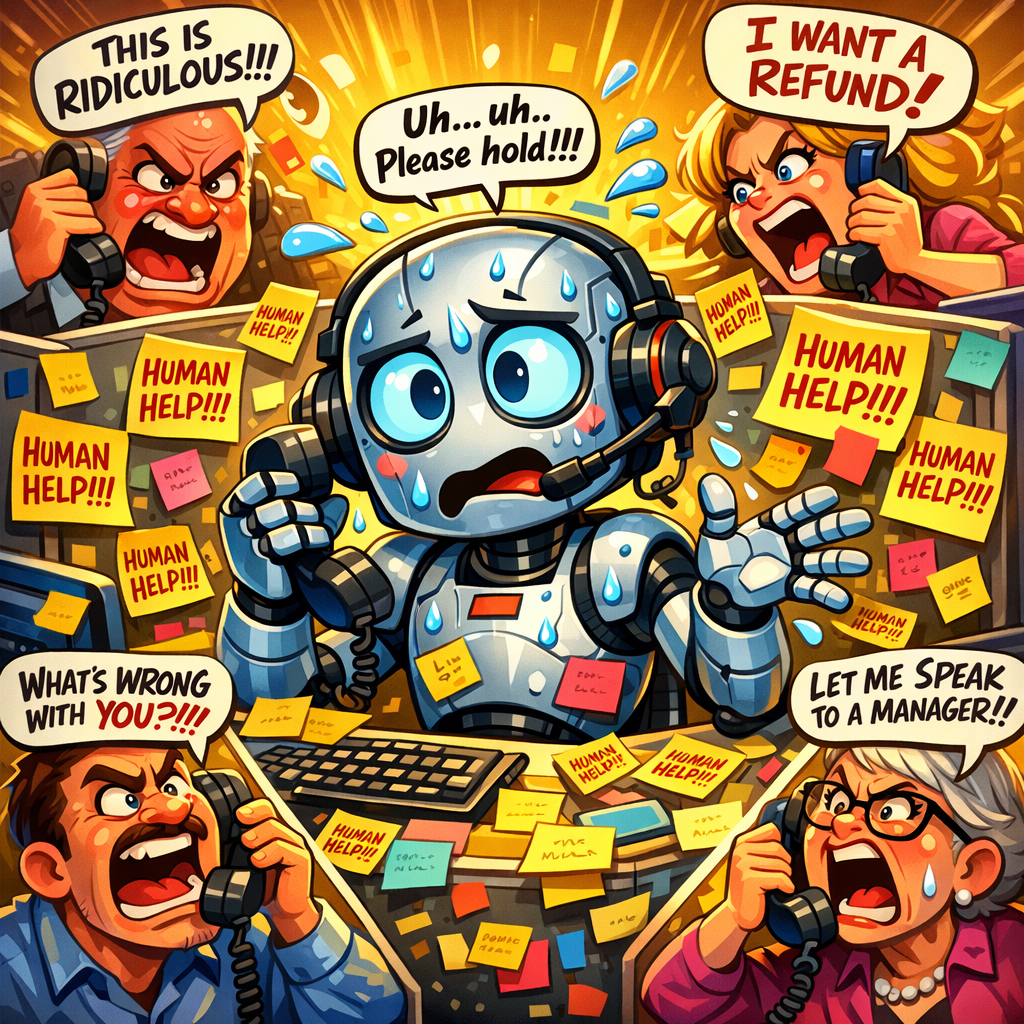
There’s a myth in tech that automation is destiny — that automation will handle everything, answer every question, and eventually render human involvement obsolete. But if you’ve ever found yourself trapped in a loop of automated phone menus, or experienced the frustration of an AI that didn’t actually understand you, then you already know the truth:
Automation alone can be efficient — but it can’t be wise.
In the world of voice systems, the future isn’t purely AI. It’s not human alone either. The future — and the present — belongs to hybrid human + AI call systems. These systems blend the strengths of artificial intelligence with the irreplaceable nuance of human insight. And today, they outperform fully automated solutions not just by a little — but decisively.
Let’s unpack why this hybrid model isn’t just better in theory — but dramatically better in real outcomes, real customer satisfaction, and real business performance.
🤖 The Promise and the Limitation of Fully Automated Call Systems
When companies first embraced AI call systems, the pitch was irresistible:
- 24/7 availability
- Instant responses
- Lower labor costs
- Fast resolution
- No human error
Yet somewhere between the buzzwords and reality, customers started hitting walls:
- “I didn’t mean that.”
- “You didn’t understand my accent.”
- “That’s not what I asked.”
- “Can I please speak to a real person?”
Fully automated systems are great at predictable, structured tasks — the things that can be reduced to patterns and repeatable responses. But even in customer service, not all problems are predictable. Not all questions fit neatly. And not all humans speak like bots.
In these moments, automation without humanity becomes a blind spot.
🧠 Why Humans Still Matter (Even in an AI World)
AI can process language.
AI can transcribe.
AI can summarize.
But humans still excel at:
🎯 Contextual judgment
Humans know that “I’m not happy” can mean anything from irritation to subtle sarcasm. AI might see unhappy words — but humans feel intent beneath them.
💬 Emotional intelligence
Customers often speak in half-sentences, overlapping topics, emotional tone shifts, or cultural nuance. Only humans — or hybrid systems — can truly interpret this.
🔄 Complex problem solving
When a call requires lateral thinking or creative resolution, human agents shine where AI fails or loops.
🤝 Trust and reassurance
Sometimes customers don’t just want solutions — they want empathy, acknowledgment, and rapport.
Automation alone can answer what happened.
A human — or a human-augmented system — can answer why it matters.
🔄 The Hybrid Advantage: AI + Human in Concert
The magic happens when AI and humans are not competitors — but collaborators. Here are the core ways hybrid systems outperform fully automated ones:
🚦 1. AI Handles Routine — Humans Handle Complexity
AI is perfect for
✔ Answering simple FAQs
✔ Pulling up account info
✔ Repeating structured responses
✔ Routing calls efficiently
✔ Detecting when a human is needed
Humans are perfect for
✔ Nuanced judgment
✔ Conflict resolution
✔ Emotional reassurance
✔ Escalations
✔ Anything messy multilayered, or uncertain
This division of labor is not compromise — it’s efficiency plus expertise.
⏱️ 2. Faster Escalation — Without Losing Context
In fully automated systems, when a customer is forwarded to a human, the agent may have no idea what just happened. The customer repeats themselves. Frustration doubles. Time is wasted.
In hybrid systems:
- AI summarizes the conversation
- AI detects sentiment
- AI provides context to the human agent
The handoff becomes seamless. The human doesn’t start from scratch — they start with insight.
That’s not just faster.
That’s smarter.
🧠 3. Emotional Signals Guide Routing Decisions
AI can detect sentiment — frustration, confusion, calm, excitement — by analyzing tone, pauses, and phrasing. But AI alone can’t decide what to do with that feeling.
In hybrid systems, sentiment triggers dynamic routing:
- Calm, standard requests continue with AI
- Confusion or frustration routes to humans
- High-value customers skip to senior agents
- Sensitive situations get priority handling
This isn’t automation.
This is empathetic orchestration.
💡 4. Continuous Learning from Human Interventions
Every time a human steps in to handle a call that becomes a teaching moment.
In hybrid systems:
- The AI observes the human response
- Models learn from human decisions
- Future calls improve
- Escalation patterns become smarter
Automation no longer stands in isolation.
It evolves with human insight.
📈 Real Business Outcomes Speak Loudly
When organizations adopt hybrid systems, results aren’t nuanced — they’re measurable:
📌 High first-contact resolution
Because human insight catches what automation misse
📌 Lower customer frustration scores
AI handles basics. Humans handle heart.
📌 Reduced operational costs
AI handles scale. Humans handle complexity. Both at the right time.
📌 Better agent satisfaction
Humans aren’t doing repetitive drudgery — they’re doing meaningful work.
📌 Faster onboarding and training
AI carries institutional knowledge forward — no more saying, “I was trained that way.”
These are not soft metrics. These are business outcomes.
🧩 Why Fully Automated Systems Don’t Cut It (Yet)
The dream of total automation is seductive. But here’s the reality:
- Language is messy
- Emotions color intent
- Culture affects expression
- Complex problems require intuition
- Customer relationships depend on trust
Tools and models — even the smartest ones — aren’t people. They lack the lived experience, the empathy, and the adaptive creativity that humans bring.
Automation can handle the expected.
Humans handle the unexpected.
And business doesn’t live in just the expected.
🧠 The Future Is Not Human or AI — Its Human with AI
In 2026 and beyond, the leaders won’t be those who automate everything — they’ll be the ones who orchestrate intelligence, where:
✨ AI amplifies human capability
✨ Humans guide AI with judgment
✨ Systems learn from both
✨ Interactions feel responsive, not robotic
This isn’t compromise.
This is complementary design.
Because when AI and humans work together:
- Volume becomes manageable
- Nuance becomes visible
- Speed becomes smart
- Efficiency becomes empathetic
- Solutions become meaningful
And that’s how you win — not just by being fast, but by being understood.
🌟 The Bottom Line
Fully automated call systems are efficient.
Hybrid human + AI call systems are effective.
AI alone can respond.
Human + AI can relate, resolve, and retain.
The future of voice systems is not replacement — it’s reinforcement.
Not substitution — but synergy. And that’s not just good technology.
That’s good business
