

Enterprise Voice Assistants That Auto-Summarize Meetings & Calls
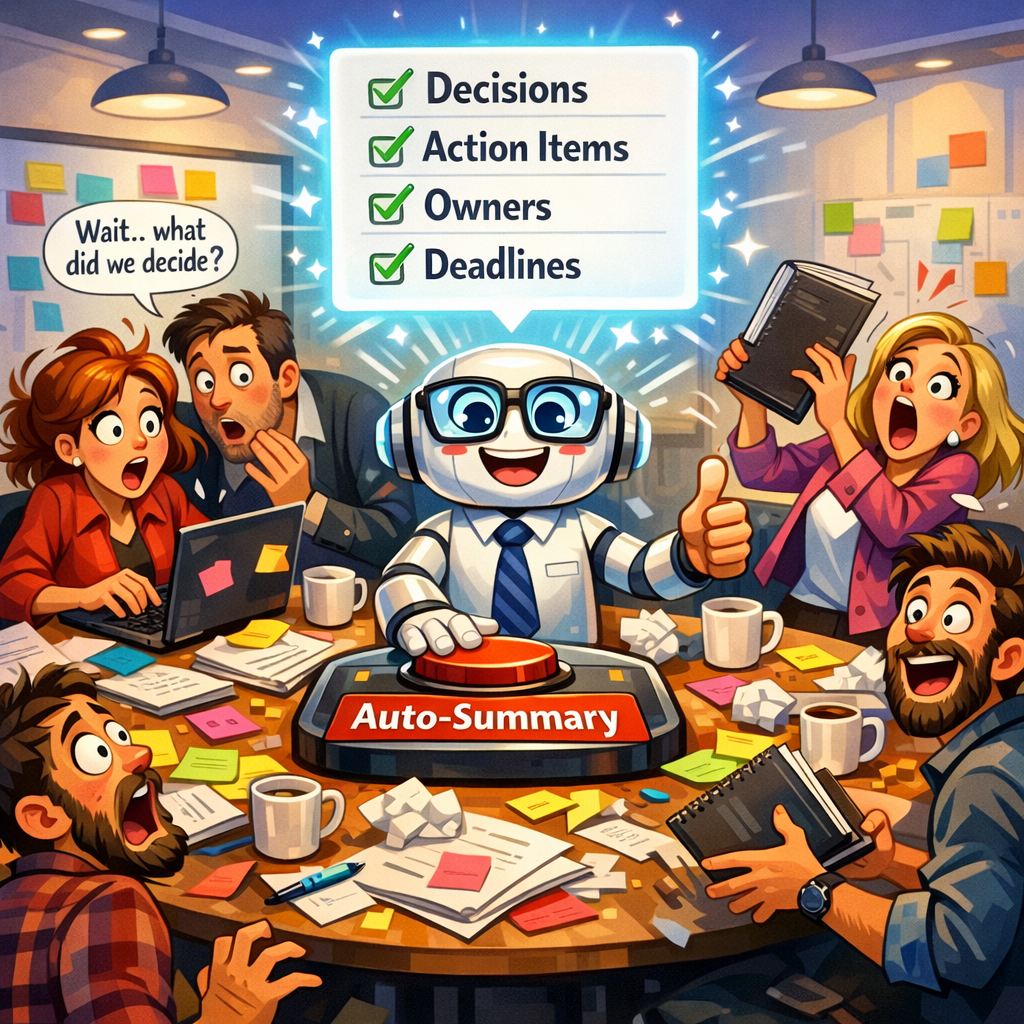
There’s a quiet transformation happening in workplaces around the world — one that doesn’t get headlines, doesn’t require spreadsheets, and doesn’t show up in quarterly earnings calls. It lives in the space between what was said and what was understood. That space is messy, emotional, meaningful, and absolutely full of value. And for too long, it’s been buried in recordings, meeting minutes, and forgotten threads.
But now — with the rise of enterprise voice assistants that auto-summarize meetings & calls — that buried value is being unearthed and elevated. What used to take hours of note-taking, re-listening, or manual synthesis now happens in the blink of an eye — not because machines simply transcribe speech, but because they comprehend, extract, and distill meaning into concise, actionable summaries.
This isn’t futuristic hype. This is happening today — reshaping decision-making, boosting productivity, and transforming the way work actually gets done.
Let’s explore how auto-summarizing voice assistants are not just tools — they are strategic amplifiers of organizational intelligence.
🎙️ The Problem Isn’t Talking — Its Remembering
Every day, teams everywhere:
- host meetings
- join calls
- brainstorm ideas
- onboard new members
- discuss problems
- negotiate solutions
- share context
- trade insights
But what happens next?
Meeting ends.
That conversation vanishes.
Insights fade.
Decisions get forgotten.
Follow-ups get lost.
Knowledge that was spoken — and meant to be acted upon — disappears into silence.
And because human memory is unreliable, companies lose value every time a conversation evaporates into thin air.
Auto-summarizing voice assistants solve not transcription, but the continuity problem:
How do we capture what’s meaningful from spoken interaction — instantly, reliably, and in a way that drives action?
🧠 1. Beyond Raw Transcripts — Intent, Insight & Action
Transcription is just the first step. A transcript is a wall of text. Useful? Sometimes. Strategic? Rarely.
Auto-summarize means:
✔ identifying key takeaways
✔ highlighting decisions made
✔ listing action items
✔ capturing assigned owners
✔ indexing topics discussed
A human note-taker might capture:
“We talked about the new feature.”
An auto-summarizing voice assistant captures:
Outcome: Decide to prototype the new feature
Owner: Sasha
Deadline: Next Tuesday
Support needed From: Product & Design
This is structured insight, not just text.
When spoken conversations become data structures, work becomes discoverable, actionable, and manageable.
🔍 2. What Modern Assistants Capture Subtly — Humans Often Miss
Human note-taking is shaped by:
- bias
- memory limits
- attention lapses
- interruptions
- subjective interpretation
Voice AI listens with contextual depth:
🗣️ Speaker roles
Who said what? Who agreed? Who asked for clarification?
🧩 Intent
Was the speaker suggesting, requesting, confirming, or questioning?
📋 Decision outcomes
Not just “something was discussed” — what actually changed?
🏷️ Action items
Who is supposed to do what, by when?
💬 Sentiment cues
Was the mood urgent, hesitant, excited frustrated?
These aren’t just annotations — they are decision signals that tell the organization what matters.
⏱️ 3. Time Saved — In Hours and Brain Power
Imagine this:
Person A spends 30 minutes summarizing a meeting.
Person B spends another 20 minutes cleaning it up.
Person C tries to interpret it later — and has to reread, re-listen, re-understand.
Before you know it, hours of productivity are lost every week just recovering memory.
With auto-summaries:
- Meetings are instantly distilled
- Action items are auto-tracked
- Follow-ups are automatically generated
- Email recaps are created before you blink
It’s like having an assistant who never sleeps, never forgets, and never misunderstands.
📊 4. Knowledge Becomes Searchable Intelligence
Ever tried to find that one insight from a meeting three months ago? Keyword search isn’t enough. You need meaning search — where you query not just “words,” but contexts.
Advanced voice assistants let you ask:
“Show all decisions about pricing from Q1 meetings.”
“Where did we talk about the new onboarding flow?”
“Which discussions referenced customer churn?”
“What follow-ups did we assign to Angela?”
Conversations become:
✔ indexed knowledge
✔ organizational memory
✔ searchable databases
✔ strategic intelligence
This isn’t just retrieval — it’s recall with purpose.
🤝 5. Better Onboarding & Team Alignment
New team members often suffer from context oblivion — they don’t know the backstory.
Auto-summarizing systems let you give them:
- concise context capsules
- decision synopses, not long transcripts
- role-based summaries
- prioritized reads
Instead of “Go read the meeting notes”, you can say:
“Here’s what we decided yesterday — and here’s what you need to act on first.”
This eliminates hours of confusion and accelerates alignment.
📈 6. Smart Action Item Management — No More Lost Tasks
Voice assistants don’t just summarize; they organize action.
From calls and meetings, they can:
✔ extract tasks
✔ assign owners
✔ schedule deadlines
✔ send reminders
✔ integrate with calendars
✔ sync with project boards
✔ notify stakeholders
This transforms meetings from conversations into execution engines.
It’s the difference between talking about work and doing work.
🧠 7. Context Preservation across Conversations
Meetings are rarely isolated. Decisions made in one conversation influence the next.
Auto-summarizing assistants preserve context across time:
- linking related meetings
- tracking the evolution of topics
- detecting repeated concerns
- highlighting unresolved issues
This creates a web of conversation intelligence — where each talk reinforces the next, and nothing is truly lost.
That’s how teams actually build coherence at scale — not chaos.
🚀 8. The Productivity Multiplier Effect
Think of auto-summarizing voice assistants as productivity multipliers. They don’t just eliminate grunt work; they amplify clarity, continuity, and execution velocity.
When every meeting:
✔ gets a precise recap
✔ automatically schedules what’s next
✔ connects to strategic goals
✔ feeds back into knowledge systems
✔ becomes searchable intelligence
…work becomes flow, not friction.
This is why teams that adopt voice summarization don’t just save time.
They move faster, think clearer, and innovate smarter.
✨ 9. The Human & Machine Partnership
Some fear voice automation will replace humans. But the truth is deeper and more empowering:
Auto-summarizing voice assistants don’t replace your brain — they extend it.
They preserve nuance, highlight intent, track outcomes, and manage continuity — all while freeing humans to focus on judgment, creativity, and strategy.
This is the real promise of enterprise intelligence:
Not robots that take notes,
but systems that understand, distill, and elevate human work.
🌟 The Bottom Line
Meetings and calls are not just rituals.
They are production lines for insight — moments where strategy is formed, questions are raised, decisions are made, and priorities shift.
Voice assistants that auto-summarize:
- capture meaning
- extract signals
- elevate intelligence
- empower execution
- preserve memory
- accelerate alignment
- boost productivity
They don’t just record conversations.
They translate them into strategic action. And in a world where clarity beats chaos and execution beats intention — that’s not just helpful.
That’s transformative.
