

The Role of Voice Data in Agile Product Development
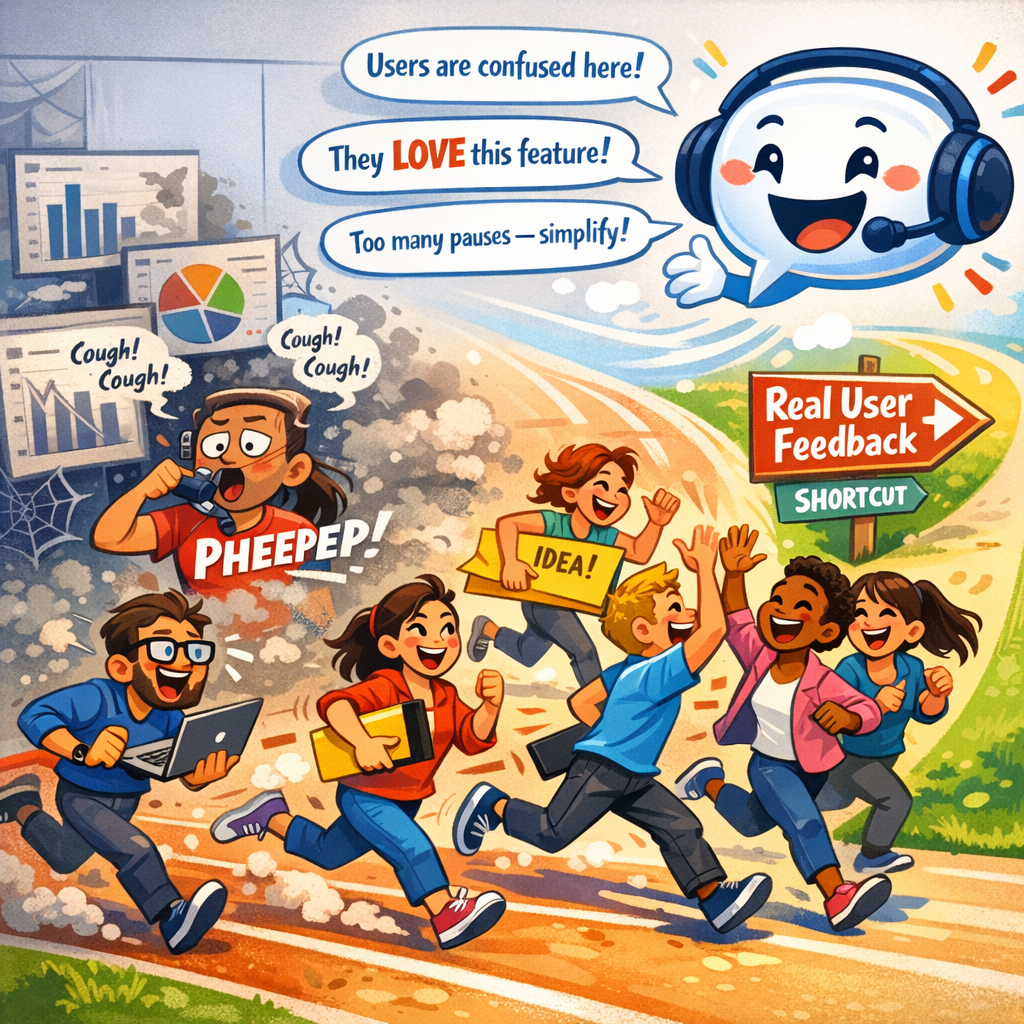
Imagine a product team sprinting ahead — developers coding, designers adjusting, marketers polishing the story — all racing toward a release date like runners in a relay. Everyone’s watching metrics, dashboards, ticket counts, burn down charts… but something crucial is missing. The loudest signal of all: what real humans actually say when they use your product
Voice data — not the sterile logs of clicks, taps, and scrolls — but the real, unfiltered conversations between users and voice interfaces — holds a tremendous untapped signal. It’s the raw expression of need, confusion, intent, delight, and frustration, all waiting to be harnessed. When product teams integrate voice data into their agile iterations, something magical happens:
Products stop being built on assumptions and start being shaped by the authentic rhythms of real human experience.
This article explores the transformative role voice data plays in agile product development — not as a perk, but as a strategic source of insight that accelerates learning, reduces guesswork, and gives teams a human-centered compass in the chaotic world of product evolution.
🗣️ 1. Voice Data Isn’t Logs — it’s Human Expression
Traditional product metrics are useful:
✔ How many users clicked
✔ Where drop-off rates spike
✔ How long sessions last
…but these numbers don’t tell you why users behave the way they do.
Voice data — audio plus semantic meaning — lives on the human side of the interaction.
When a user says:
“I’m stuck here…”
“Why is this so confusing?”
“I love this feature!”
“When will this be available on Android?”
That tone, pauses, hesitations, and intent are all part of the signal, not noise. Voice data captures:
🔹 what people say
🔹 how they say it
🔹 what they feel while saying it
This is emotive insight, and it’s priceless in agile product work.
🧠 2. Voice Data Becomes Early Detection of Product Signals
In agile product development, feedback cycles are meant to be short and powerful. But most teams rely on quantitative signals that lag behind the user’s real experience.
Voice data accelerates this because it provides forward-leaning insight — cues that show up before users take downstream action like churn, escalation, or abandonment.
For example:
- Rising hesitations when pricing is mentioned
- Increasing pauses around onboarding steps
- Repeated questions about the same feature
- Emotional spikes at specific points in a demo
These aren’t retrospective numbers. They are predictive signals — early indicators that guide product teams to pivot, refine, or reinforce before the problem becomes pervasive.
In agile terms — that’s faster learning loops.
🔁 3. Closing the Feedback Loop in Real Time
Agile is about iteration — build, measure, learn, repeat. But measure is often limited to dashboards and surveys. Voice data takes measurement to another level:
📍 Real-time sentiment analysis
What are users feeling now?
📍 Intent extraction
What are they trying to do right now?
📍 Topic clustering
What issues are recurring now?
Instead of waiting for end-of-cycle reports, voice data delivers instant feedback that can be fed back into the next sprint:
“Customers hesitate here — let’s simplify.”
“This phrase confuses users — let’s reword.”
“They LOVE this part — amplify it.”
That’s not just feedback. That’s real-time product intelligence.
📊 4. Voice Data as Strategic Artifact — Not Ephemeral Noise
Many teams think of voice interactions as ephemeral events — audio that lives and dies in a server somewhere. But when you treat voice data as an artifact — something that’s stored, indexed, and made query able — you unlock long-term insight.
Voice data, when transcribed and enriched with:
✔ sentiment scores
✔ intent annotations
✔ topic tags
✔ emotional markers
✔ context references
becomes a searchable knowledge base.
Product teams can ask questions like:
- “Where do users most frequently express confusion?”
- “What emotional trend appears after the pricing explanation?”
- “When does sentiment shift from positive to negative?”
Instead of guessing, teams can look at the voice evidence — a source of truth grounded in human expression.
🧩 5. Agile Workflows Breathe With Human Signals
Voice data fits seamlessly into agile practices when it’s integrated into:
📦 Sprint reviews
Teams can highlight emotional feedback trends alongside technical metrics.
🎯 Retrospectives
Instead of “we missed this KPI,” teams can say “users expressed this concern in real time.”
🧪 Iteration planning
Voice signals inform which features matter most to humans, not just to dashboards.
🔍 User story refinement
Voice feedback can shape acceptance criteria:
“When the bot asks pricing questions, it should detect hesitation and provide clarity.”
This turns voice from a byproduct into a product accelerator.
🤝 6. Cross-Functional Alignment through Shared Language
One of the hardest things in product teams is alignment: marketing, design, engineering, support — everyone hears different stories. But when voice data becomes the shared artifact, teams begin discussions with a common reference:
“Here’s what users actually said — not what we think they feel.”
Voice data carries:
- Emotional context
- Language patterns
- Recurrent themes
- Real user phrasing
- Implicit unmet needs
This shared language fosters empathy across teams, transforming meetings from debate to understanding.
📈 7. Iteration Velocity Turns Into Learning Velocity
Agile aims for velocity — the speed at which a team delivers value. But true product velocity isn’t about shipping faster — it’s about learning faster.
Voice data accelerates learning by:
- reducing assumptions
- providing real signals
- shortening feedback loops
- revealing patterns earlier
- helping teams validate hypotheses quickly
Instead of:
“We think users want X…”
Teams can say:
“Users said X with hesitation 27% of the time — let’s test Y.”
That’s actionable intelligence in the moment.
🧠 8. Context Preservation over Time
Voice data doesn’t just help in the moment — it builds context over time.
When properly stored and annotated, it becomes:
- a library of user evolution
- a map of product perception over releases
- a timeline of user sentiment shifts
- a source for retrospective pattern tracing
This historical context transforms voice interactions from transient signals into institutional memory.
And in agile teams — where knowledge continuity matters — this is a force multiplier.
🌟 9. Product Decisions Become Human-Centered, Not Assumption-Driven
The most transformative effect of voice data is not in its technical sophistication — it’s in how it humanizes product development.
Instead of:
“Our analytics say this trend…”
Teams hear:
“Users said this… with emotion… in context…”
Voice data brings back the human voice into product decisions, grounding every iteration in real human experience.
✨ The Bottom Line
Product development isn’t just about writing features —
it’s about understanding humans.
Voice data is the richest form of that understanding. It captures:
✔ what users say
✔ how they say it
✔ why they feel that way
✔ when they hesitate
✔ what they care about most
In agile development, where learning is the real deliverable, voice data becomes the accelerant that turns raw interactions into actionable insight, validated iteration, and human-centered evolution.
The role of voice data isn’t peripheral.
It’s fundamental.
It’s strategic.
It’s human. And when teams embrace it — not as an afterthought, but as a core feedback engine — they don’t just build products faster.
They build products people love faster.
