

The Future Belongs to Emotion‑Stable Interfaces
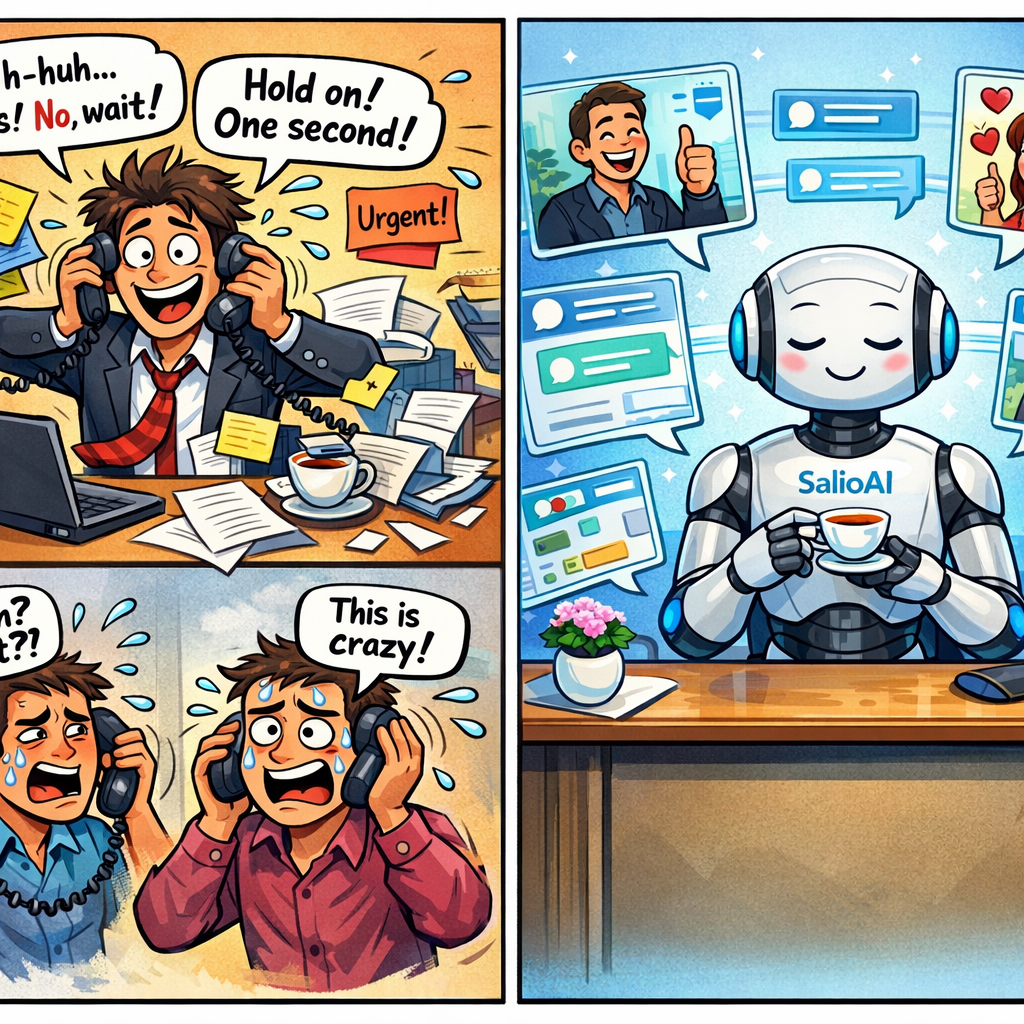
Not because machines are replacing humans — but because emotional stability is becoming the new currency of trust, decisions, and lasting customer relationships.
For generations, we’ve believed that great technology is fast, intuitive, and powerful.
But there’s a deeper truth emerging — one that leaders don’t talk about enough:
Speed and strength matter — but emotional stability in interfaces matters even more.
Because at the end of the day, every interaction is emotional before it’s rational.
Customers don’t just hear words — they feel them.
They don’t just read responses — they experience the mood behind them.
And in a world saturated with digital touch points, the interfaces that stay calm, consistent, and emotionally stable are the ones customers trust and return to — again and again.
What Do We Mean by “Emotion‑Stable Interfaces”?
Emotion‑stable interfaces are systems — often powered by AI — that interact without emotional volatility.
They don’t:
❌ Panic
❌ over‑react
❌ sound frustrated
❌ lose context
❌ or drift in tone based on stress or workload.
Instead, they consistently convey
✔ clarity
✔ confidence
✔ smooth pacing
✔ stable tone
✔ predictable responsiveness
This may sound subtle — but subtlety is where emotional trust lives.
When customers feel emotionally stable while interacting, their brains stop scanning for danger signals and start listening for meaning.
And that’s the foundation of every strong business interaction.
Why Emotional Stability Matters More Than Ever
Think about the last time you were on a call where the other voice felt jittery:
- a rushed tone
- hesitant replies
- flat emotional cadence
- uncertain pacing
Most people don’t audit these things consciously —
they just feel uncomfortable.
Emotion is the silent layer beneath every conversation.
In psychology, human beings are wired to:
- detect emotional cues instantly
- interpret them faster than words
- respond based on comfort, not logic
We can rationalize later — but we feel first.
That means interfaces — digital or human — that feel unstable make customers uneasy.
In the world of sales and customer engagement, that uneasiness translates into:
- hesitation to commit
- reduced willingness to share information
- extended decision cycles
- higher churn
- weaker rapport
Unstable emotion isn’t just an interaction flaw —
it erodes revenue before metrics notice.
The Problem with Human‑Only Emotional Capacity
Humans are remarkable communicators — intuitive, empathetic adaptive
But humans also:
- get tired
- get distracted
- respond differently based on mood
- lose context
- slip in tone without realizing
Emotional stability isn’t a flaw in human nature — it’s a biological limitation.
No matter how skilled a salesperson is, over dozens of calls, hours in a day, or stress across a quarter, emotional consistency naturally drifts.
Tone shifts.
Pacing alters.
Confidence fluctuates.
Customers feel all of this.
And when emotional signals feel uncertain, decision pathways tighten.
Why Digital Interfaces Can Be More Emotion‑Stable than Humans
This is where the narrative takes a turn that many leaders still resist saying out loud:
Digital systems — especially AI voice agents — can maintain emotional stability better than humans.
Not because machines are cold.
Not because they lack empathy.
But because they don’t lose emotional context.
They don’t get:
- tired at the end of a long day
- distracted by interruptions
- influenced by mood swings
- affected by multitasking
They simply respond with calibrated emotional consistency — every time, without drift.
And that consistency creates comfort.
Comfort builds trust.
Trust accelerates sales.
Customer research repeatedly shows that consistency in interaction matters more to people than charm, novelty, or speed.
Because consistency creates predictability — and predictability feels safe.
SalioAI: Emotional Stability Engineered In
This is where SalioAI becomes not just a tool — but a strategic advantage in modern engagement.
SalioAI doesn’t sound robotic because it doesn’t just transmit information — it shapes emotional experience.
Here’s how SalioAI delivers emotional stability:
1. Consistent Tone across Every Call
SalioAI uses calibrated voice models that maintain the same reassuring, confident tone, regardless of volume, complexity, or time of day.
2. Predictable Pacing That Matches Human Comfort
Instead of rushing or dragging, SalioAI’s timing mirrors natural, thoughtful conversation — no awkward pauses, no rushed interjections.
3. Context‑Aware Continuity
SalioAI remembers what was said earlier in the conversation — and in prior interactions — preserving emotional continuity so the customer never feels forgotten or misunderstood.
4. Error‑Free Emotional Cues
Humans can accidentally send mixed signals. SalioAI minimizes that risk by consistently applying empathetic, context‑appropriate language.
5. Scalability without Emotional Drift
Where human teams tire and vary, SalioAI stays stable, call after call, interaction after interaction, ensuring emotional experience never degrades.
This isn’t cold.
This isn’t uniform.
This is optimized emotional presence.
Customers don’t just hear the message — they feel it as reliable.
And that reliability becomes a brand signal.
The Commercial Advantage of Emotion‑Stable Interaction
Emotionally stable interfaces deliver value in three areas every business cares about:
1. Higher Engagement
Customers stay in the conversation longer when they don’t feel uncertain or emotionally jolted.
2. Faster Decisions
Comfort and predictability reduce cognitive friction — and help people decide more quickly.
3. Increased Loyalty
People return to interactions that feel safe, clear, and predictable.
In sales, this translates into:
✔ shorter sales cycles
✔ higher close rates
✔ stronger referrals
✔ deeper long‑term relationships
And none of these show up in traditional dashboards until much later.
Emotionally unstable interactions don’t break things instantly —
they leak value quietly.
Emotion‑stable interfaces stop the leak.
Human Empathy + AI Stability: The Winning Combination
Let’s be clear — this isn’t a story of humans being replaced.
Humans are essential for:
- complex negotiations
- emotional nuance
- strategic decision‑making
- creative problem solving
- deep relationship building
But humans benefit from emotional stability engines backing them up.
SalioAI doesn’t take empathy away from humans —
it supports humans so their emotional presence stays consistent.
In other words:
AI handles the stable emotional baseline —
humans bring the elevated emotional intelligence.
This fusion — consistent baseline + strategic human nuance —
is the emotionally intelligent future of business communication.
The New Expectation: Calm is the New Competitive Edge
Customers used to endure inconsistency.
But in an era of instant expectations and tight attention, that patience is gone.
Today:
- people avoid emotional volatility
- they trust stable voices
- they choose interfaces that feel safe, clear, and predictable
- they repeat interactions that feel comfortable over time
And because emotional response is a felt experience —
not a rational one — this preference shows itself in behavior before it shows up in words.
That means businesses that invest in emotional stability win faster —
before competitors even realize the edge exists.
Conclusion: Stability Is the New Human Advantage
The future belongs to systems that don’t just solve problems —
but support emotional experience.
Not speed alone.
Not automation alone.
Not raw data alone.
But emotional stability, at scale.
SalioAI isn’t just a voice agent —
it’s an emotionally stable interaction partner that makes every conversation feel:
✔ safe
✔ clear
✔ confident
✔ coherent
✔ consistent
And when conversations feel stable, people listen, trust, and decide.
The future of business won’t just be about what you say —
it will be about how reliably you make people feel understood. Emotionally stable interfaces are not a luxury.
They are the new frontier of trust, connection, and growth.
