

Omnichannel Follow-Ups That Feel Human
Because Customers Don’t Just Want Replies They Want Responses That Feel Personal, Immediate, and Thoughtful
A follow-up isn’t a checkbox.
It isn’t a line item you mark “done” in a CRM.
A follow-up is a moment of connection.
A chance to transform curiosity into trust.
A bridge between interest and action.
And in today’s high-speed, high-expectation world, how you follow up matters as much as when you follow up.
People are no longer impressed by generic replies.
They’re irritated by them.
They crave interactions that feel:
- personal
- responsive
- context-aware
- human
Omnichannel follow-ups — messages that flow naturally across voice, text, email, chat, and social — are the new baseline of great customer experience.
But here’s the secret most brands overlook:
Customers don’t judge follow-ups by technology — they judge them by feeling.
If it feels human, they engage.
If it doesn’t, they close the window and move on.
Let’s explore why omnichannel follow-ups that feel human win, and how platforms like SalioAI make that effortless — even at scale.
What “Omnichannel” Really Means Today
Omnichannel used to mean “we’re on multiple channels.”
Now it means:
- continuity across channels
- context preserved across touchpoints
- conversations that feel like conversations
not broadcasts
A customer might:
- see your ad
- click through to your site
- leave without completing a form
- receive an SMS follow-up
- then get an email
- then a voice message
- then a proactive chat invite
If each message feels disjointed — different tone, repeated questions, no awareness of history — the experience feels robotic.
If each message feels connected, warm, and intelligent, the experience feels human.
That’s the power of true omnichannel follow-ups.
The Psychological Currency of a Human-Like Follow-Up
Why does human-feeling follow-up matter so much?
Because people crave:
- recognition (“You remember me.”)
- context (“You know what I care about.”)
- relevance (“This is actually useful.”)
- respect (“You didn’t waste my time.”)
A follow-up that hits those emotional benchmarks:
✔ reduces frustration
✔ increases engagement
✔ builds trust
✔ shortens decision cycles
✔ improves sales
Feeling understood isn’t just pleasant.
It’s a strategic advantage.
Where Traditional Follow-Ups Fall Short
Old follow-up strategies often feel like this:
📍 “Thanks for your interest. Please let us know if you have questions.”
📍 crickets
📍 days later: “Did you still need help?”
That’s not helpful.
That’s hopeful.
Customers see right through:
- copy-paste messages
- generic templates
- delayed responses
- repeated questions
They don’t want automation that sounds automatic.
They want automation that feels intentional.
That’s not a small distinction.
It’s the difference between engagement and silence.
SalioAI: Making Follow-Ups Feel Human — Automatically
This is where SalioAI transforms the follow-up game.
SalioAI doesn’t just send messages.
It orchestrates responses based on real intent — across channels — with timing and tone that feel natural.
Here’s what that looks like in practice:
1. Context-Aware Messaging
SalioAI remembers what the customer said — not just that they said something.
No repeating questions.
No robotic detachment.
2. Human-Like Timing
Not too fast (which can feel mechanical).
Not too slow (which feels neglectful).
Just right.
3. Emotionally Tuned Tone
Warm when appropriate.
Neutral when necessary.
Responsive without pressure.
4. Seamless Channel Transitions
From voice to SMS to email to chat — the conversation feels continuous, not fragmented.
SalioAI does this not because it’s scripted — but because it learns patterns of human connection.
Why Seamless Follow-Ups Lead to Better Sales
Let’s be clear: follow-ups aren’t just about reminders.
They’re about relationship continuity.
When a follow-up feels reactive:
- customers ignore it
- interest fades
- sales slip away
When a follow-up feels proactive:
- customers feel valued
- doors stay open
- conversations deepen
- conversions rise
SalioAI helps sales teams:
✨ qualify leads faster
✨ reduce churn
✨ increase response rates
✨ deliver personalized experiences at scale
A human-feeling follow-up isn’t just polite.
It’s persuasive.
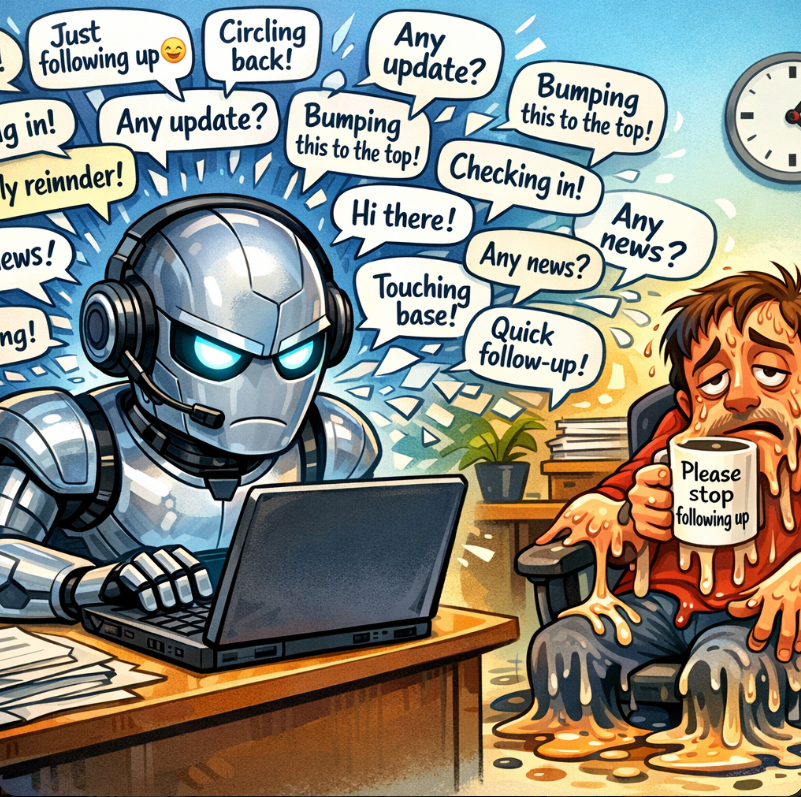
The Art of Not Being Annoying
Annoying follow-ups feel like:
- repeated pings
- pressure to buy
- stray generic messages
Human-feeling follow-ups feel like:
- thoughtful replies
- context-aware nudges
- answers that fit the customer’s rhythm
That’s not coincidence.
That’s design.
People don’t just tolerate follow-ups anymore.
They judge brands by them.
Freedom Without the Overhead
Here’s the part that excites founders and small teams:
You don’t need:
- a big budget
- a giant comms team
- years of trial and error
to deliver premium follow-ups.
You need:
📌 intelligence
📌 empathy
📌 timing
📌 consistency
SalioAI delivers all of that — automatically.
That’s the future of sales:
less busy work, more human connection.
When Every Follow-Up Feels Personal
Omnichannel follow-ups shouldn’t feel like:
- noise
- interruption
- obligation
They should feel like:
✔ relevance
✔ invitation
✔ understanding
✔ momentum
✔ care
When customers feel understood, they respond.
They open emails.
They answer calls.
They return texts.
They convert.
And they remember the brand that made that experience feel effortless.
That’s not luck.
That’s how omnichannel follow-ups become a strategic advantage.
Final Thought
Customers don’t want to be chased.
They want to be connected.
Not just contacted.
Not just followed up.
Not just reminded.
They want follow-ups that feel like a natural continuation of the conversation — not a disruption.
And in the age of AI, that isn’t just possible.
It’s essential.
With tools like SalioAI, you don’t just handle follow-ups.
You elevate them.
That’s how ordinary interactions become remarkable experiences.
And remarkable experiences are what customer loyalty — and revenue — are built on
