

People Prefer Systems That Don’t React Emotionally
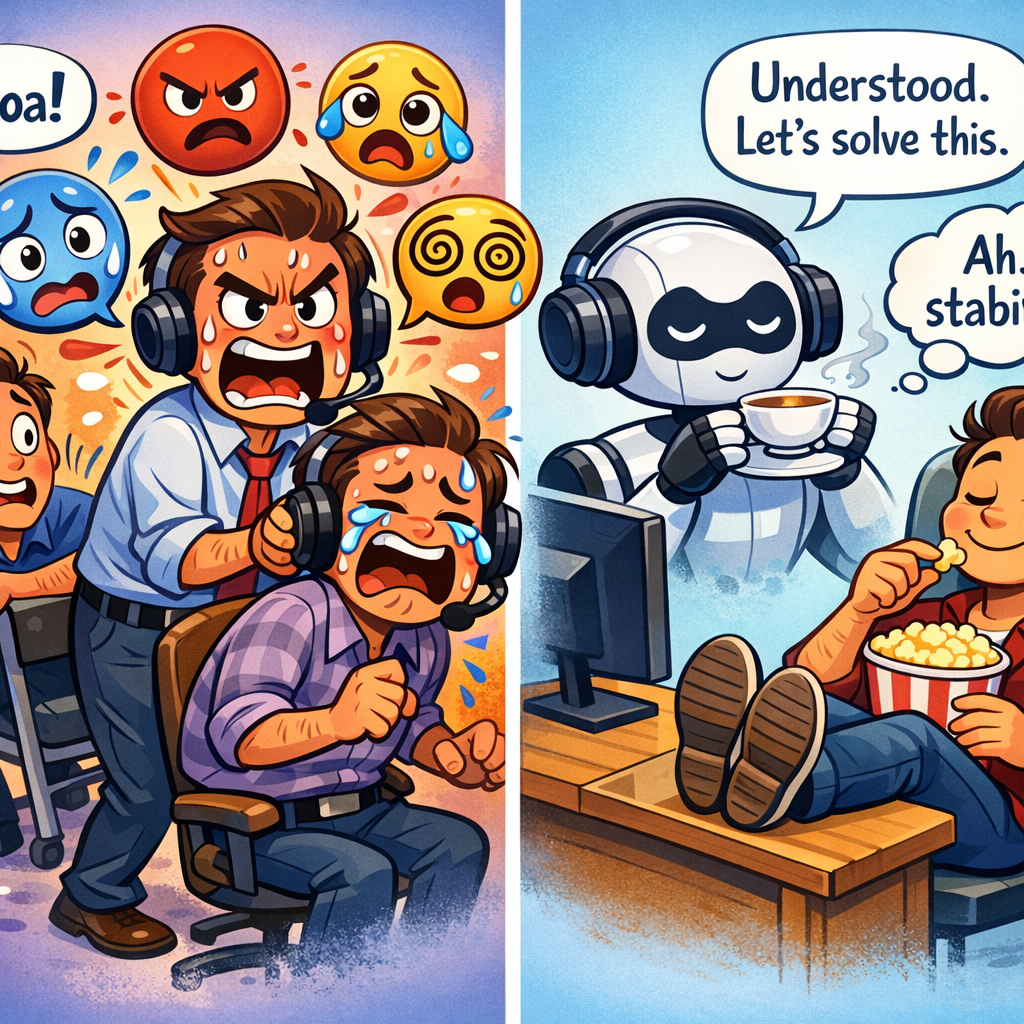
In a world where emotional volatility is the default human experience, there’s a quiet revolution underway — customers now prefer systems that respond with composure, consistency, and clarity. And in sales, that preference is reshaping how competitive advantage is built.
Today’s customers are inundated with emotions — digital noise, constant notifications, rapid shifts in tone, and unpredictable human reactions.
And most people subconsciously believe:
“If it feels warm, it must be good.”
But here’s a deeper truth that’s emerging in customer psychology:
Warmth matters — but consistency of response matters more.
People don’t just want emotional intelligence — they want emotional stability.
In other words:
Customers prefer systems that don’t react emotionally.
Not because they’re cold.
Not because they’re impersonal.
But because predictability — not emotional fluctuation — creates comfort, clarity, and confidence.
And when conversations feel calm and collected — decisions come easier, commitments feel safer, and relationships last longer.
Human Emotional Reaction: Strengths and Limitations
Human communication is rich with nuance, empathy, and emotional intelligence.
But it also carries:
- mood swings
- stress responses
- tiredness
- varying energy
- distraction
- inconsistency
- emotional leakage
A rep may be warm and empathetic in one call —
but distracted and curt in the next.
Human emotions are natural —
but unpredictable.
Customers can sense this unpredictability even when they can’t articulate it.
It’s not that humans shouldn’t be empathetic —
it’s that variability in emotional expression creates friction in high-stakes conversations.
Because when a conversation feels emotionally volatile, customer brains interpret that as risk — emotionally and cognitively.
And human brains are hardwired to avoid risk.
Why Stability Beats Emotional Reactivity
Let’s break down the difference.
Emotional Reactivity
- tone changes unpredictably
- mood influences messaging
- pauses feel hesitant
- responses feel inconsistent
- emotional fatigue affects execution
- conversational drift appears
This creates:
❌ cognitive friction
❌ decreased trust
❌ unclear expectations
❌ slower decisions
❌ weakened engagement
Emotional Stability
- tone remains composed
- messaging stays consistent
- pacing is predictable
- context preserved
- clarity maintained
- confidence conveyed
This creates:
✔ psychological comfort
✔ clear expectations
✔ trust continuity
✔ stronger engagement
✔ faster decisions
✔ sustained momentum
In sales and customer experience, people don’t just respond to what is said — they feel how it’s said.
And stability — calm, consistent, unreactive response — signals confidence and reliability.
That emotional groundwork accelerates decisions more effectively than warmth alone.
Sales Conversations: Why Emotional Stability Matters
Customers don’t want to be handled emotionally.
They want to be understood clearly.
A warm tone is nice.
A predictable tone creates trust.
A customer doesn’t say:
“Please be emotionally stable.”
They feel:
“This conversation feels calm and in control.”
And the brain instantly interprets that as:
- low risk
- high clarity
- safe to proceed
- easy to engage
In sales, decisions are not made with logic alone —
they are made with emotion tempered by stability.
When stability is present:
📈 customer confidence rises
📈 hesitation falls
📈 conversations deepen
📈 decisions accelerate
📈 long-term relationships form
When emotional reactivity is present:
📉 signals get muddled
📉 conversations derail
📉 trust fragments
📉 prospects withdraw
📉 momentum evaporates
Systems That Don’t React Emotionally Create Psychological Safety
One of the most powerful drivers of engagement is psychological safety — the internal sense that the space is predictable, dependable, and non-threatening.
Systems that don’t react emotionally inherently provide that safety.
They:
✔ avoid mood-based shifts
✔ provide consistent tones
✔ maintain conversational pace
✔ deliver clarity every time
✔ preserve context across interactions
✔ respond without bias
That’s not cold.
That’s reliable.
And in sales — where customers are evaluating risk, value, and alignment — reliability isn’t just important —
it’s essential.
When customers don’t have to wonder:
- Is this person tired?
- Are they annoyed?
- Did I trigger a defensive reaction?
…they can focus on the decision itself.
That’s where real engagement lives.
SalioAI: Emotionally Stable Interaction at Scale
This is where SalioAI shines — not just as a voice or automation tool, but as a stability engine for conversation.
SalioAI doesn’t have:
- mood shifts
- fatigue
- reaction bias
- distraction
- emotional inconsistency
Instead, SalioAI delivers:
🔹 composed responses
🔹 predictable pacing
🔹 context-driven continuity
🔹 clarity without cognitive noise
🔹 confidence without emotional drift
🔹 execution without emotional variability
Customers don’t consciously choose stability —
they instinctively respond to it.
SalioAI doesn’t feel warm the way humans do —
but it feels reliable, clear, and safe every single time.
That’s a subtle difference —
but one that dramatically improves engagement.
Calm Over Passion — Stability Over Reactivity
People don’t reject passion.
They reject unpredictability.
Unpredictability triggers uncertainty.
Uncertainty slows decisions.
Slowed decisions cost revenue.
In contrast, stability delivers:
✔ expectation
✔ comprehension
✔ flow
✔ trust
✔ confidence
This is why brands with consistent communication styles — not just charismatic ones — outperform their peers.
Customers don’t just want to be impressed.
They want to feel safe while deciding.
Stability doesn’t dim the spark —
it grounds it.
The Future of Engagement Is Predictable and Clear
We are moving into an era where:
📌 customers expect clarity
📌 clarity builds trust
📌 trust accelerates decisions
📌 decisions drive growth
📌 growth is built on consistency
Not just speed.
Not just charm.
Not just friendliness.
But predictable, emotionally stable communication.
This is the new frontier in customer experience and sales —
where calm, consistent systems outperform emotionally variable ones.
And SalioAI — by design — delivers that stability across every interaction —
not occasionally, not variably, but consistently.
Customers stay not because they feel emotionally managed —
but because they feel mentally unburdened.
They don’t get distracted by emotional shifts.
They stay focused on clarity, relevance, and alignment.
And in the end — that’s what drives decisions.
Conclusion: Stability Isn’t cold — It’s Confidence
Customers don’t want systems that react emotionally.
They want systems that respond with clarity.
Emotionally reactive interactions create noise.
Emotionally stable systems create understanding.
SalioAI doesn’t remove humanity.
It removes unpredictability.
In a world full of emotional fluctuation, attention scarcity, and cognitive overload —
stability becomes the signal that customers listen to.
Customers don’t consciously articulate:
“I prefer stability over emotion.”
But they feel it, respond to it,
and reward it with engagement, loyalty, and decisions.
Because when communication doesn’t react emotionally —
it speaks with confidence. And customers stay where confidence thrives
