

Humans Fear Losing Control in Conversations and That Fear Is Killing Your Sales
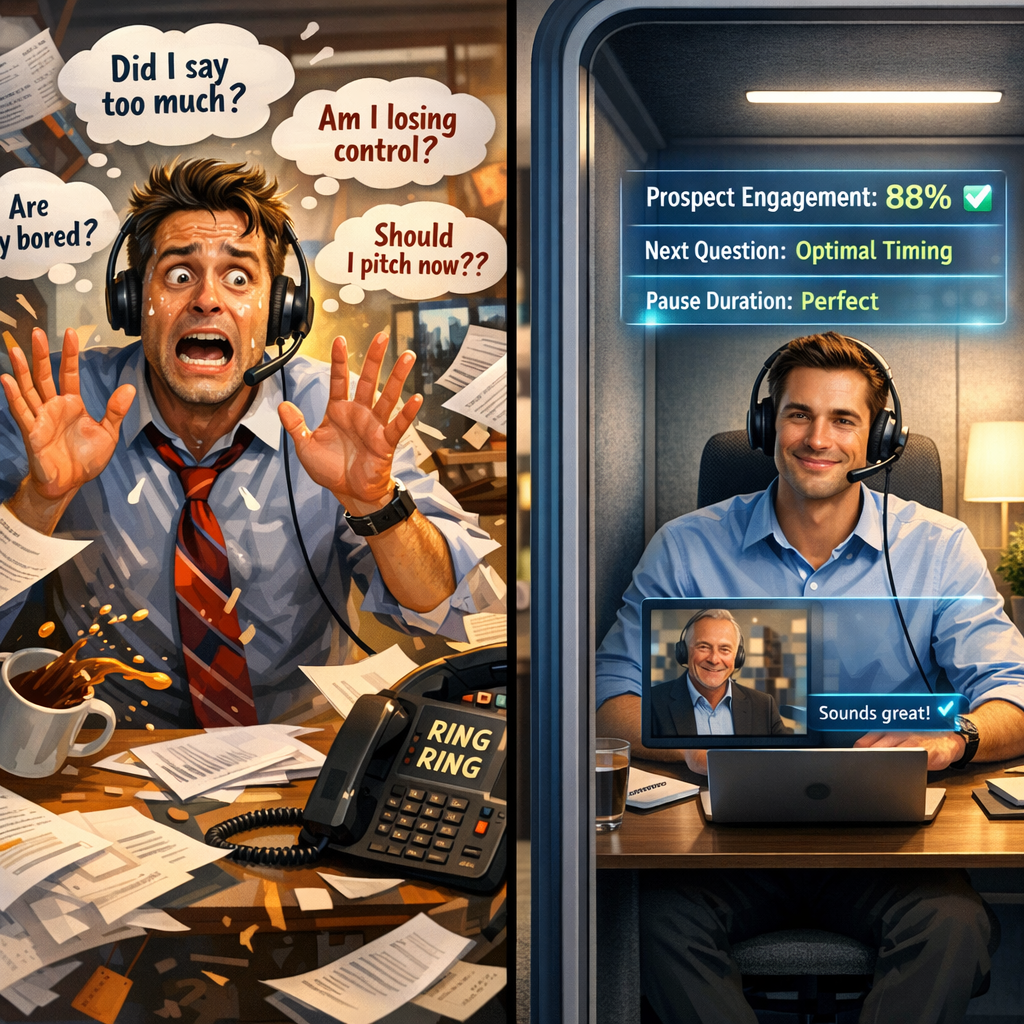
There’s a strange paradox in human interaction:
We crave connection —
yet we dread losing control in the very conversations that define our relationships, decisions, and revenue outcomes.
From boardrooms to zoom calls, from negotiations to sales calls, the same silent fear crops up:
What if I say the wrong thing?
What if they take the conversation somewhere I didn’t plan?
What if I lose influence — or lose the deal?
This fear isn’t just psychological.
It’s structural.
And until you understand it, you’ll continue losing both conversations and conversions.
Why Conversation Control Matters More Than You Think
Conversations aren’t just exchanges of words —
they’re subtle negotiations of influence.
In every discussion, two forces are at play:
🔹 The desire to be heard
🔹 The fear of having no direction
Most people focus on the first — making themselves understood.
But the real tension lives in the second:
Nobody wants to feel like they’re spiraling, reacting, guessing, or chasing the direction of the conversation.
That fear shows up in:
- Sales calls that go off track
- Negotiations where the rep gets defensive
- Follow‑ups that meander
- Conversations that slow down instead of closing deals
Control isn’t domination.
Control is structure with direction.
The Hidden Cost of Fear‑Driven Conversations
When humans fear losing control, they respond in predictable ways:
🔸 Interrupt
🔸 Over‑explain
🔸 Hedge their statements
🔸 Rush conclusions
🔸 Avoid difficult topics altogether
None of these are conscious tactics.
They’re fear responses.
And in sales, fear responses translate to:
❌ Premature pitching
❌ Poor objection handling
❌ Confusing messaging
❌ Lost momentum
❌ Lower close rates
Sales leaders talk about deal velocity.
But they rarely talk about conversational velocity — the pace, direction, and influence of dialogue.
And that’s why so many pipelines look active but still fail to close.
Why Human Reps Struggle to Maintain Conversational Control
Even experienced sales professionals fall into familiar traps:
- They wait for silence and panic
- They interpret pauses as loss of interest
- They chase answers instead of guiding discovery
- They misread signals and follow up too soon — or too late
Why?
Because humans aren’t great at real‑time pattern detection.
We feel more than we see in conversations.
We respond emotionally, not strategically.
But top performers don’t rely on instincts.
They rely on signals.
And that’s where structured systems win.
Smart conversations don’t happen By Accident They’re Engineered
What if you could know in real time:
👉 When to ask a question
👉 When to let silence work in your favor
👉 When to transition to close
👉 When a prospect is warming up
👉 When they’re just buying time
That’s not intuition.
That’s signal intelligence.
And it’s what separates lucky closers from consistently high performers.
In the age of AI‑powered sales intelligence, conversations stop being guesswork — and become predictable, guideable, and actionable.
Enter SalioAI the System That Turns Fear Into Control
Most sales teams still navigate conversations using manual feedback, gut feel, or post‑call speculation.
That’s like steering a ship by looking at the wake — not the horizon.
SalioAI changes that.
SalioAI listens to the actual engagement signals — tone shifts, hesitation patterns, response timing, keyword relevance and translates them into real‑time conversational insights.
Here’s how it structures control into every interaction:
🎙️ Predictive Momentum Signals
Instead of guessing, reps know exactly when the dialogue is ready to progress — reducing fear and increasing strategic influence.
🧠 Guided Question Timing
SalioAI helps reps ask the right question at the right moment — not the next one they remember.
That transforms conversations from chaotic to purposeful.
🔄 Engagement Feedback with Context
Imagine knowing whether a pause means:
✔ Thoughtful consideration
vs
✖ Disinterest
That’s not guesswork — that’s insight.
📈 Dynamic Closing Cues
Rather than forcing a close or missing the moment entirely, reps are signaled when the prospect is truly ready.
That’s how fear of losing control turns into confidence in closing.
The Future of Conversations Is Predictable because it’s Programmable
Today’s buyers aren’t impressed by enthusiasm —
they’re impressed by consistency, clarity, and direction.
They don’t trust randomness.
They trust reliable experiences — ones where every step feels intentional.
In other words:
Control isn’t about domination.
It’s about reducing uncertainty.
And that’s exactly what modern AI systems are designed to do.
Why Teams That Embrace AI Win More Deals
Think of it like this:
Manual conversation strategies are like trying to hit a moving target with your eyes closed.
AI‑guided conversations are like seeing the trajectory before it moves.
One feels reactive.
The other feels strategic.
One feels uncertain.
The other feels confident.
One loses deals.
The other closes them.
Conversations Don’t Have to Be Scary — Just Structured
Humans will always fear losing control when they’re left to guess.
But when conversations are guided by signal intelligence — by real‑time insights — fear evaporates.
What remains is:
✅ Clear direction
✅ Better timing
✅ Stronger influence
✅ Higher confidence
✅ More closed deals
And that’s not soft psychology.
That’s practical business strategy.
With systems like SalioAI, conversation control isn’t an art — it’s a repeatable advantage.Fear fades. Impact stays
