

Building a Better Business: How AI Voice Automation is Revolutionizing the Home Services and Contractor Industry
Introduction: The Foundation of the Home Services Industry
The home services and contractor industry is the bedrock of our communities, a world of skilled tradespeople who build, repair, and maintain our homes. From plumbers and electricians to roofers and landscapers, these professionals are the backbone of the local economy. However, the industry is also characterized by intense competition, seasonal demand, and a host of administrative challenges that can make it difficult to run a profitable business. This chapter explores how AI voice automation is emerging as a powerful tool for home services and contractor businesses, helping them to streamline their operations, improve their customer service, and build a more solid foundation for growth.
Section 1: The State of the Home Services and Contractor Industry: A World of Opportunity and Obstacles
The home services and contractor industry is a vast and diverse market, with millions of small businesses competing for the attention of homeowners. In this environment, the ability to respond to customer inquiries quickly and professionally is a major competitive advantage.
The Homeowner’s Journey: A Quest for a Trusted Professional
The homeowner’s journey often begins with a problem: a leaky pipe, a broken furnace, or a desire to remodel a kitchen. The key stages and their associated challenges include:
- Finding a Contractor: Homeowners find contractors through a variety of channels, including online search, review sites (e.g., Angie’s List, HomeAdvisor), and personal referrals. The challenge for contractors is to stand out from the competition and to make a positive first impression.
- Initial Inquiry and Estimate: Once a homeowner has found a potential contractor, they will typically call to inquire about their services and to request an estimate. The challenge for contractors is to answer all of these calls in a timely manner, as a missed call can mean a lost job.
- The On-Site Estimate: For many home services jobs, an on-site estimate is required. This can be a time-consuming process, and no-shows are a major problem.
- Scheduling the Job: Once the estimate has been approved, the job must be scheduled. This can be a logistical challenge, especially during peak season.
The Pain Points of the Modern Contractor
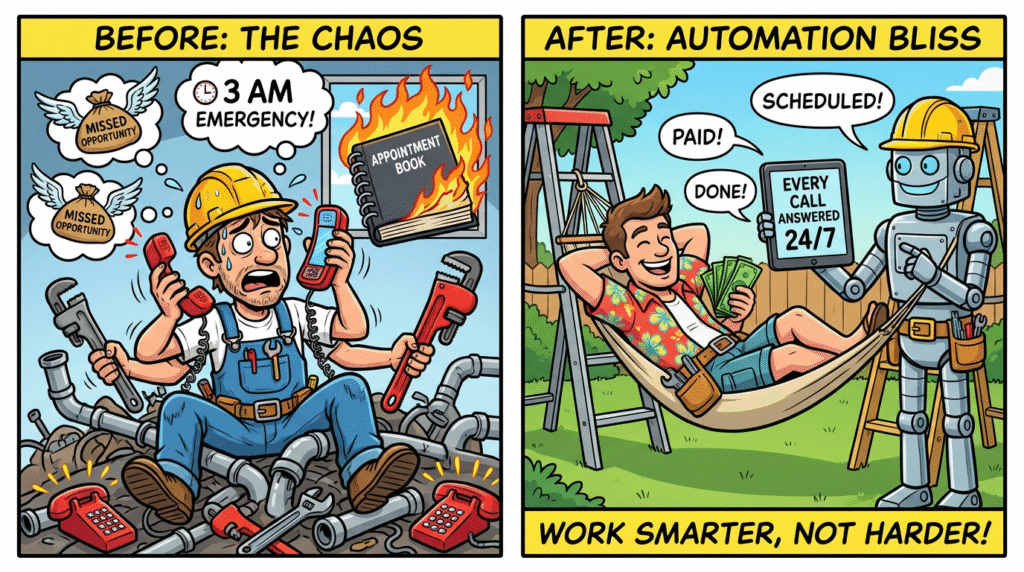
- The 24/7 Nature of the Business: Home service emergencies can happen at any time of the day or night. If a contractor is not available to answer a call, they risk losing that job to a competitor.
- The Challenge of Juggling Multiple Roles: Many contractors are small business owners who are responsible for everything from marketing and sales to accounting and customer service. This can make it difficult to focus on their primary responsibility: doing the work.
- The Frustration of Wasted Time: A significant amount of a contractor’s time can be wasted on administrative tasks, such as answering the phone, scheduling appointments, and chasing down payments.
- The Pressure to Compete on Price: In a crowded market, it can be difficult to differentiate your business on anything other than price. This can lead to a race to the bottom and a decline in profitability.
Section 2: The Transformative Power of AI Voice Automation in the Home Services and Contractor Industry
AI voice automation is providing a powerful solution to the challenges that have long plagued the home services and contractor industry. By automating many of the administrative and repetitive tasks that are currently handled by the contractor or their office staff, AI can help them to be more efficient, more effective, and more profitable.
How AI Voice Automation Works in a Home Services Setting
AI voice automation platforms can be integrated with a contractor’s existing scheduling and billing systems. The AI agents can be programmed to:
- Answer Every Call, 24/7: The AI agent can answer every inbound call, ensuring that no lead is ever missed. This is especially valuable for after-hours and weekend calls.
- Qualify Leads: The AI agent can ask a series of qualifying questions to determine if the lead is a good fit for the contractor’s services. This can include questions about the type of work that is needed, the location of the property, and the homeowner’s budget.
- Schedule Estimates and Jobs: The AI agent can access the contractor’s calendar and schedule estimates and jobs in real-time. It can also send automated reminders to the homeowner to reduce the likelihood of a no-show.
- Provide Status Updates: The AI agent can provide homeowners with status updates on their job, such as when the technician is en route.
The ROI of AI Voice Automation in the Home Services and Contractor Industry
The ROI of AI voice automation in the home services and contractor industry can be significant. By automating the front end of their business, contractors can:
- Increase Revenue: By answering every call and qualifying every lead, AI can help contractors to book more jobs and to increase their revenue.
- Reduce Costs: By automating tasks that are currently handled by a human, contractors can reduce their administrative costs.
- Improve Customer Satisfaction: A professional and efficient communication process can create a positive impression and lead to higher levels of customer satisfaction and more positive online reviews.
- Free Up Time to Focus on the Work: By freeing up contractors from administrative tasks, they can focus on what they do best: providing high-quality workmanship and excellent customer service.
Section 3: The Competitive Landscape: How Home Services Innovators are Embracing AI
The home services industry has traditionally been slow to adopt new technologies, but that is changing. A new generation of tech-savvy contractors and home services companies is embracing AI to gain a competitive edge.
- ServiceTitan: The software platform for home services businesses has been a pioneer in using technology to help contractors run their businesses more efficiently. They have recently integrated AI into their platform to provide features such as automated marketing and intelligent dispatching.
- Jobber: The software platform for small home services businesses has also embraced AI to help their customers be more successful. They offer a range of AI-powered features, including automated quoting and intelligent scheduling.
- The Home Depot: The home improvement giant is using AI to provide its customers with a more personalized and convenient shopping experience. They have implemented an AI-powered chatbot to help customers find the products they need and to answer their questions.
Section 4: Your Implementation Roadmap: A Blueprint for AI Adoption
For home services and contractor businesses, the implementation of AI voice automation can be a simple and cost-effective process. Here is a four-step roadmap to guide you:
- Choose a Platform That is Designed for Your Industry: The first step is to choose an AI voice automation platform that is designed for the unique needs of the home services and contractor industry. The platform should be able to handle the specific terminology of your trade and to integrate with your existing scheduling and billing systems.
- Start with a Single Service: It is often best to start with a single service, such as your plumbing or HVAC service. This will allow you to test the platform and demonstrate its value before rolling it out to your entire business.
- Customize the AI Agent to Your Brand: The AI agent should be a reflection of your brand and your company’s values. Work with the platform provider to customize the agent’s voice, tone, and script to ensure a consistent and professional experience for your customers.
- Market Your New 24/7 Service: Once you have implemented the platform, be sure to market your new 24/7 service to your customers. This can be a major competitive advantage, especially for emergency services.
Section 5: The Future of the Home Services and Contractor Industry: The Smart Home Meets the Smart Contractor
The future of the home services industry is a world where the smart home is seamlessly connected to the smart contractor. In this future, AI will provide contractors with real-time insights into the health of a home’s systems, allowing them to provide proactive and predictive maintenance. This will not only create new revenue opportunities for contractors but will also provide homeowners with a higher level of service and peace of mind.
Conclusion: A Solid Foundation for Growth
The home services and contractor industry is a challenging and competitive business. The contractors who can successfully leverage technology to transform their operations will be the ones who succeed in the years to come. AI voice automation is a powerful tool that can help you to do just that. By embracing this technology, you can build a more efficient, more profitable, and more customer-centric business, and lay a solid foundation for growth
