
How Custom Voice AI Pipelines Outperform Template Bots in Complex Support
There’s an invisible moment in every support interaction — a moment when a customer’s voice quivers ever so slightly, or their question softens into a pause long enough to feel human. It’s in this pregnant pause that the truth about customer experience emerges: people don’t just want answers — they want understanding.
And that — oddly enough — is where most voice bot stories go wrong.
Too many voice systems today feel like glorified robots reading scripts. They’re fast, they’re cheap, they’re easy to deploy… but they’re template bots. And when customer problems get messy, emotional, layered, or unexpected — template bots fall apart like a house of cards in a breeze.
The future of support isn’t about better templates. It’s about custom voice AI pipelines — systems that learn, adapt, interpret nuance, and behave less like rolling scripts and more like empathetic collaborators. If companies want true support intelligence at scale, they need voice systems that are built, not borrowed.
Let’s unpack how and why custom voice AI pipelines leave template bots in the dust — and why your next support strategy should be built from the ground up, not boxed in.
🎙️ The Illusion of Templates: Fast Isn’t the Same as Smart
Template bots are like pre-written answers in a FAQ document — they work fine when everything is simple, clean, and predictable. But real support rarely lives there.
Customers ask questions that:
- Defy expected patterns
- Mix emotional nuance with technical detail
- Combine multiple issues in one breath
- Use cultural idioms or slang
- Shift context mid-conversation
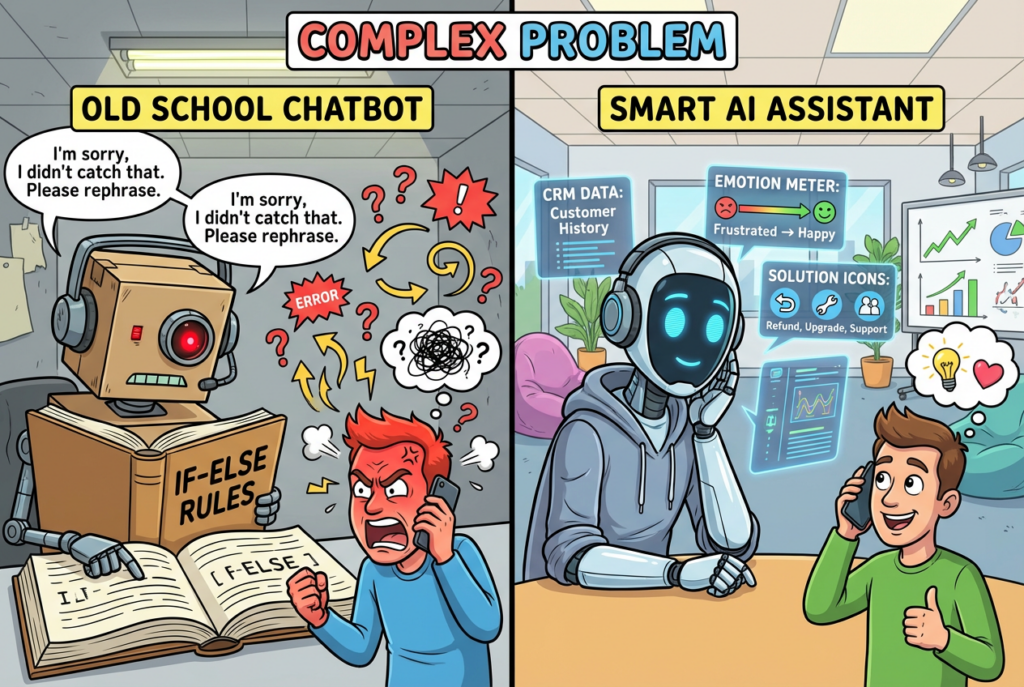
A template bot tries to respond by matching keywords — but humans speak with meaning, not keywords. Real understanding requires context, memory, and situational awareness — things simple bots don’t have.
Template bots are like actors reading lines. Custom voice AI pipelines are like storytellers living the story.
🧠 What Custom Voice AI Pipelines Truly Do
A custom voice AI pipeline does more than respond — it interprets, remembers, adapts, and predicts. Think of it as a layered system with three superpowers:
🔍 1. Contextual Comprehension
While a template bot hears words like “refund” or “delay,” a custom pipeline understands why those words matter. It tracks follow-ups, recognizes sentiment, and remembers past interactions — turning fragmented snippets of speech into a narrative.
For example:
Customer: “Yeah, this delivery thing has been frustrating… and it’s the third time.”
Template Bot: “I’m sorry you feel that way.”
Custom Voice AI: “I see your frustration. Last time we offered expedited shipping — would you like that now, or prefer a refund?”
That difference — from robotic response to genuine assistance — is what moves customers from annoyance to relief.
🔁 2. Memory That Matters
Template bots don’t remember. Every interaction is a reset — like meeting someone new every time they open their mouth. That’s fine for simple queries — terrible for support continuity.
Custom pipelines store relevant details:
✔ Past complaints
✔ Solutions offered
✔ Customer preferences
✔ Sentiment patterns
✔ Escalation history
This memory lets the voice AI build on what it already knows — like a human support agent who actually pays attention.
A returning customer asking about a recurring issue shouldn’t get the same generic response. They should get something that acknowledges their history — and custom voice AI makes that possible.
🤖 3. Adaptive Learning — Not Static Scripts
Template bots are like textbooks — static and forever frozen. Custom pipelines are like apprentices — dynamic and ever-learning.
These AI systems don’t just follow rules. They:
- Spot patterns in how questions evolve
- Update responses based on outcomes
- Learn which replies reduce escalations
- Optimize follow-up strategies over time
That means the system improves itself — not by human tweaking alone, but by learning from millions of real conversations.
It’s the difference between:
- “Here’s the answer we’ve always used”
and - “Here’s the answer that actually worked last time.”
And that variation matters when support becomes complex.
🎯 4. Emotional Intelligence Built from Data
Human conversations aren’t just transactional — they’re emotional. A frustrated voice rises. A relieved voice softens. A confused voice hesitates. Custom pipelines pick up on these cues.
They monitor:
💛 Tone shifts
💬 Pauses and inflection
😟 Frustration spikes
😊 Satisfaction cues
Template bots? They react to words.
Custom pipelines? They react to emotion conveyed through voice.
Support isn’t just about solving problems — it’s about de-escalating stress and affirming the human experience. AI that knows how a customer feels is infinitely more effective than one that only hears what they say.
📈 5. Outcome-Driven Responses — Not Guesswork
Template bots hope to respond. Custom voice AI knows what good looks like.
It doesn’t just answer:
- “Your order was delayed.”
It proposes: - “Would you prefer a partial refund or expedited shipping — and here’s why each option makes sense.”
That’s because the pipeline isn’t static. It’s informed by real support outcomes — resolution time, escalation frequency, satisfaction scores, repeat calls — and it uses those signals to predict the best next step.
This turns support into guided dialogue, not mechanical Q&A.
🧩 6. Integration with Deeper Systems
Custom voice pipelines connect with:
- CRM systems
- Customer profiles
- Billing engines
- Logistics tools
- Feedback loops
Template bots can respond — but custom pipelines can act:
- Update records
- Trigger workflows
- Schedule callbacks
- Escalate high-value issues
- Recommend cross-sell opportunities
This isn’t a script — it’s a living system that listens, learns, and does.
🧠 So Why Do Businesses Default to Template Bots?
Because templates are easy. Fast. Low-cost. And they give the illusion of automation without the upfront effort of customization.
But if support is your frontline of customer experience, illusion won’t cut it. When problems are messy, emotions run high, and nuance matters — you don’t want a bot that recites answers. You want a system that understands, adapts, and responds in real time, like a seasoned human agent — only faster, consistent, and always learning.
✨ The Bottom Line
Template bots are toys.
Custom voice AI pipelines are tools for real work.
Template bots answer.
Custom pipelines elevate the interaction.
Template bots repeat scripts.
Custom pipelines optimize stories.
When support gets complicated — when sentiment matters, history matters, continuity matters — only custom voice AI pipelines rise to the occasion. Your customers aren’t scripts.
Your support shouldn’t be either.
