
Real-Time API Voice Bots for Predictive Customer Intent Routing
There’s a moment in every customer conversation when something reveals itself — a subtle shift in tone, a pause that signals hesitation, a word spoken with a breath of urgency. In traditional systems, these cues pass unnoticed. They end up buried in transcripts, forgotten in ticket queues, or left to human guesswork.
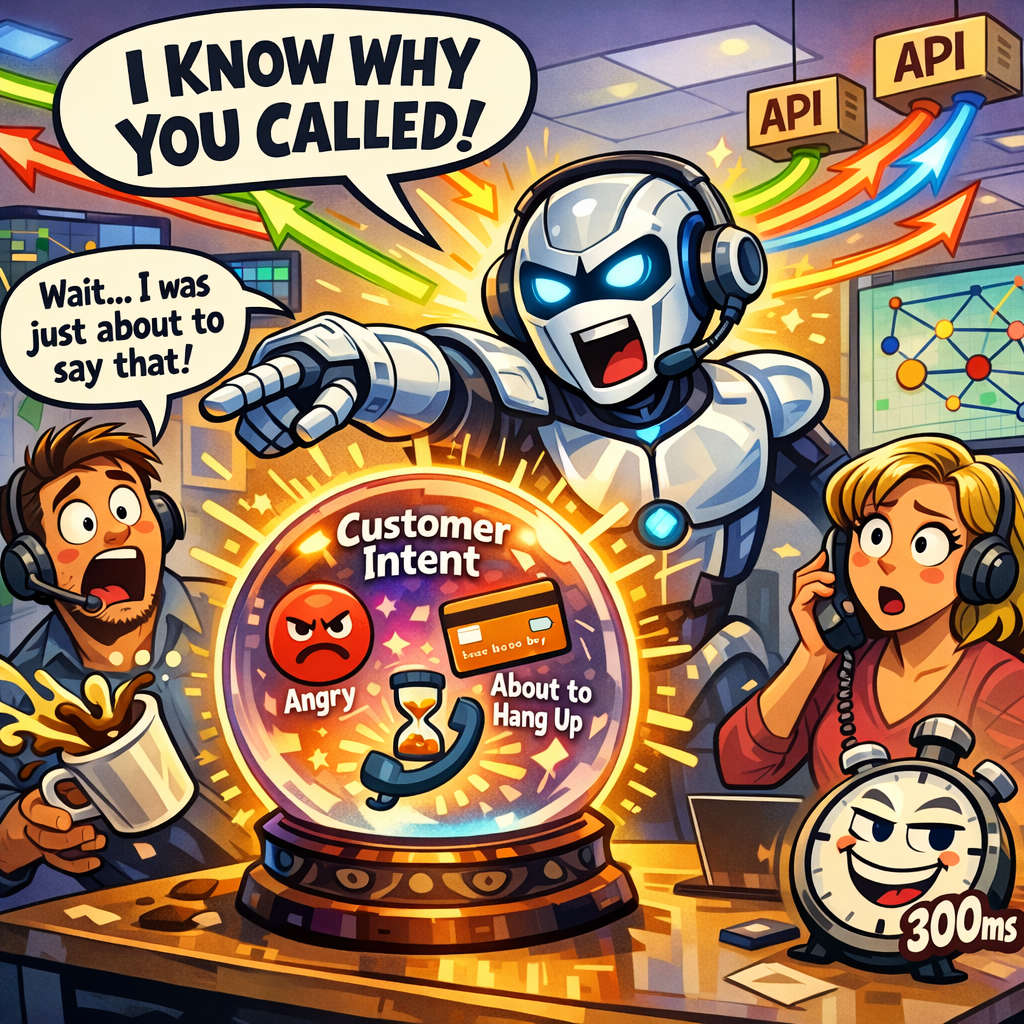
But what if your systems could feel those moments? What if your voice bot could not only hear customers — but predict what they want before they fully articulate it? That’s the promise and the poetry of real-time API voice bots with predictive customer intent routing: AI that doesn’t just respond, but understands, anticipates, and guides.
This isn’t abstract tech fluff. This is where voice bots stop being reactive tools and start acting like strategic partners in customer experience — guiding interactions toward better outcomes, faster resolutions, and remarkable satisfaction.
Let’s dive deep and make this not just understandable, but unforgettable.
🎧 Why Real-Time Matters More Than You Think
A voice interaction isn’t just a sequence of words — it’s a conversation in motion. Every customer interaction is live, unpredictable, and full of nuance. Traditional bots treat queries like tickets — static, sequential, backward-looking. But customers don’t think in tickets. They think in moments.
Real-time API voice bots hear those moments as they unfold. They don’t wait for the call to finish and then process. They process as the call flows. That means:
- Immediate detection of intent
- Fast extraction of emotional cues
- Dynamic routing to the best next step
- Personalized follow-up actions
Real-time isn’t a nice-to-have. It’s the difference between hearing customers and understanding them.
🧠 What Predictive Intent Routing Really Is
Let’s strip away the jargon and look at what’s actually happening.
Traditional Routing:
Customer calls → Bot asks scripted questions → Match keyword → Pass to agent.
Predictive Intent Routing:
Customer begins talking → Voice bot analyzes:
- Words
- Tone
- Emotion
- Speech patterns
- Historical data
- Past interactions
Then — before the call even finishes — the system identifies why the customer called and routes them to the best possible next action:
✔ Live agent with expertise
✔ Self-help resources
✔ Follow-up scheduling
✔ Escalation paths
✔ Product specialists
This isn’t automation. It’s anticipation.
🧩 How Real-Time API Voice Bots Change the Game
🔥 1. Skip the Script, Catch the Meaning
Instead of rigid menus (“Press 1 for billing…”), real-time bots listen to natural speech — interpreting meaning, context, and intent without making customers repeat themselves.
A customer might say:
“Hey, I’m honestly frustrated with how long this is taking…”
A static bot hears frustration.
A predictive voice bot hears intent to escalate, potential churn, and urgency — and reroutes accordingly.
📊 2. Predictive Routing Is Like Reading Minds — Without the Creepy Part
Voice bots don’t read thoughts — they detect patterns.
They analyze:
- Voice inflections
- Emotional arousal
- Keyword combinations
- Historical behavior
- Customer profiles in CRM
- Previous outcomes
Within milliseconds, the system predicts whether the call is:
- A support case
- A sales opportunity
- A renewal conversation
- A churn risk
- A high-value escalation
Then it routes the caller dynamically — not when the customer decides, but when the system predicts.
That’s predictive power.
⚡ 3. Faster Resolutions, Happier Customers
The result isn’t just routing — it’s experience amplification.
When customers reach the right resource immediately:
✔ Wait times plummet
✔ Escalations drop
✔ Satisfaction soars
✔ Agents are empowered, not overwhelmed
✔ Revenue loss from churn shrinks
Customers feel heard instantly — not shuffled through menus.
🤖 How It Works Under the Hood
This isn’t magic — it’s engineering, sculpted into elegance:
🎤 Speech Analysis in Real Time
Audio streams are converted into actionable signals — not just text, but emotional and semantic vectors.
🧠 Intent Prediction Engines
Multiple models run in parallel:
- Natural Language Understanding
- Sentiment Analysis
- Context Memory
- Behavioral Pattern Matching
🔍 Contextual Insight Fusion
The system doesn’t see a phrase in isolation. It fuses:
- Current conversation
- Past interactions
- Customer value tiers
- Contact history
- Product usage data
🔀 Actionable Routing Decisions
Within milliseconds, the bot decides:
- Best agent
- Best next action
- Best follow-up strategy
This isn’t speedy replies — this is smart replies.
🧠 The Human Impact
Listen to this:
Customers would rather wait an extra minute for a helpful answer than get an instant but irrelevant one. Relevance > speed. Meaning > response time.
Predictive routing delivers both. Speed with relevance. Empathy with precision. That’s why customers feel supported — not processed.
Agents also benefit. They don’t waste time on basic classification. Instead, they engage where human judgment matters most — the tricky, value-rich, emotionally complex moments. This is where experience becomes delight instead of transaction.
📈 Real Results Look Like This
In teams that adopt real-time predictive voice routing:
- Average handle time drops
- First-contact resolution rises
- Customer satisfaction scores skyrocket
- Churn decreases
- Upsell opportunities increase
Not vaguely better — measurably better.
🎯 So What’s the Bottom Line?
Real-time API voice bots with predictive intent routing aren’t just a technology upgrade. They are a paradigm shift in how businesses listen to, interpret, and respond to human needs.
They transform voice interactions from:
📞 Reactive → 🤖 Predictive
🕐 Lagging → ⚡ Instant
🧠 Guesswork → 📊 Insight
👤 Generic → 🎯 Personalized
Because the future of customer engagement is not just about responding fast — it’s about responding right. And when your systems can anticipate intent, your customers feel understood before they finish speaking. That’s not automation. That’s empathy engineered
