

Searcher Calls: How Transcribed Voice Becomes Business Knowledge
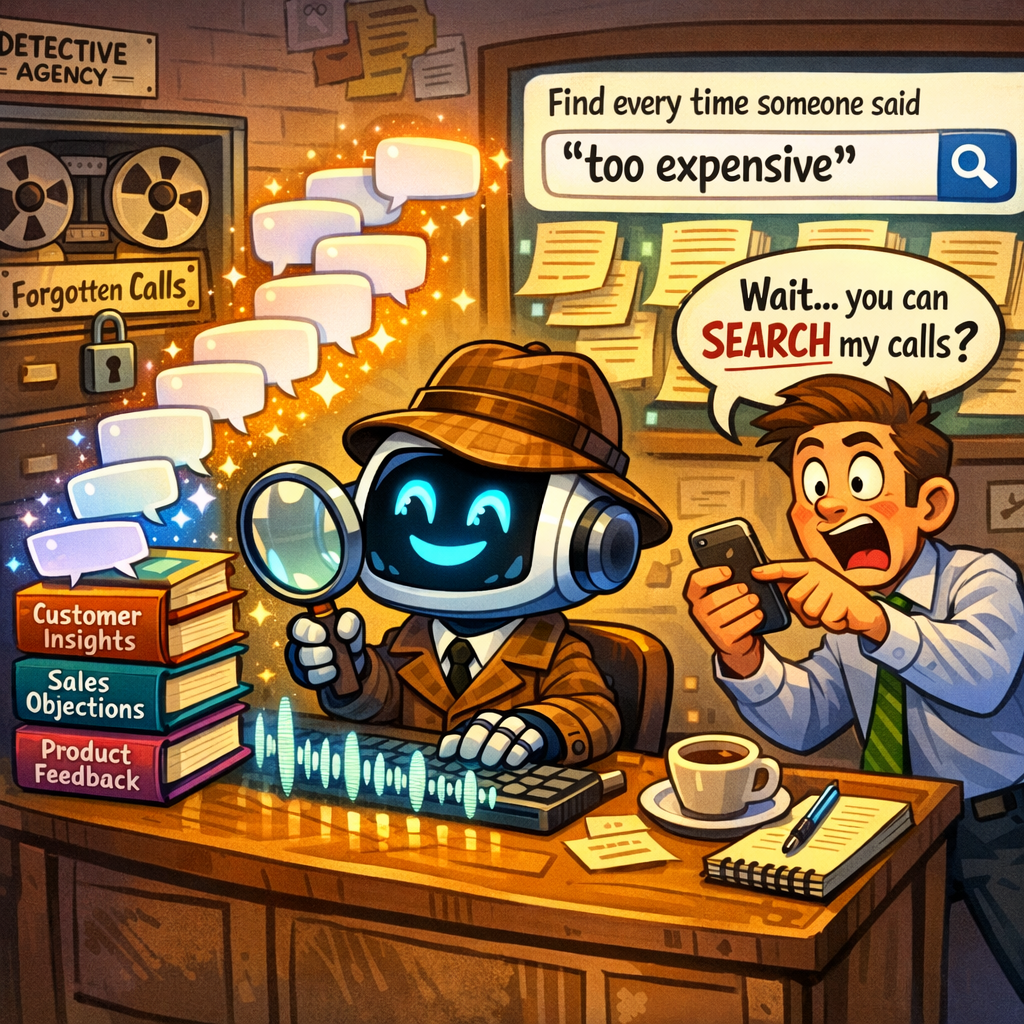
There’s a quiet revolution happening in businesses right now — one that doesn’t live in dashboards, spreadsheets, or quarterly reports. It lives in spoken words. The questions customers ask, the hesitations in their voice, the two-minute arguments about pricing, the excitement in their tone when something clicks… all of it contains rich insight.
But here’s the problem: voice is ephemeral. It floats through space and time, alive for a moment, then gone — unless someone painstakingly turns it into text, notes, or some flat, lifeless record. That’s where businesses miss out. They hear voices, but they don’t translate them into knowledge.
Welcome to the era of searcher calls — where transcribed voice isn’t just recorded text… it becomes strategic business intelligence.
This is not about technology for technology’s sake. It’s about turning human conversation into a living, searchable, actionable source of truth that fuels better decisions, stronger teams, and smarter strategies.
Let’s explore how that transformation happens — and why it matters more than most executives realize.
🎙️ Voice Is Knowledge Waiting to Be Unearthed
Think about your last serious conversation with a customer support agent, salesperson, or product expert. That exchange wasn’t just words — it was context, emotion, motivation, resistance, and decision dynamics — a whole world of insight.
But when you take a voice call and stick it in a folder? It becomes forgotten knowledge. Dead text. Unsearchable memories tucked away.
The magic happens when *voice is transcribed and indexed — and then made searchable like a database. That’s the real breakthrough. Instead of asking:
“Who remembers what the customer said last quarter?”
You can search:
“Find all calls where customers expressed confusion about X feature.”
Or:
“Show calls where price was mentioned alongside dissatisfaction.”
Suddenly voice isn’t just audio — it’s live data with retrieval power.
🔍 1. Searcher Calls: When You Can Search Your Conversations
The term searcher calls describes the ability to treat past conversations like a query able database.
Instead of manually mining transcripts, teams can type questions like:
- “Show all calls mentioning integration issues.”
- “Which customers expressed churn risk last month?”
- “Find sales objections related to new pricing.”
- “List customer mentions of competitor products.”
It’s like turning every spoken call into a document in your internal Wikipedia — one that’s not just indexed by keywords, but by intent, sentiment, and context.
This is the transformation from noise to knowledge.
🧠 2. How Transcription Becomes Structured Insight
At first glance, transcription seems simple: convert audio to text, right?
But smart systems go further:
📌 Tagging & Metadata
Each spoken segment gets enriched with:
- Speaker identity
- Confidence scores
- Sentiment tags
- Intent markers
- Emotional cues
A line of text suddenly carries strategic meaning, not just words.
Example:
“I’m confused about how this plan works.”
That may sound like text — but when tagged, it becomes:
Intent: confusion | Topic: pricing plan | Sentiment: negative
Now you can query for patterns — not just read text.
📈 3. Searchable Knowledge = Smarter Business Decisions
When voice calls become searchable knowledge, the impact ripples across teams:
🧩 Product Teams
They can find real user feedback patterns across thousands of calls without sampling or bias.
💡 “What part of onboarding causes most frustration?”
💡 “Which feature requests appear most often?”
💬 Sales Teams
Instead of relying on memory or notes, they can query:
📌 “Which competitor was mentioned most in last quarter’s calls?”
📌 “What pricing objections occur most for enterprise clients?”
This turns sales experience into accessible intelligence.
🛠️ Support Teams
Support transitions from reactive to anticipatory:
📌 “Show tickets that escalated after negative sentiment spikes.”
📌 “Find phrases that precede churn intention.”
Now support isn’t just problem-fixing — it’s prediction and prevention.
🤝 4. Conversations Become Shared Knowledge — Not Personal Memory
One of the biggest barriers to organizational knowledge isn’t lack of data — its knowledge silos. Conversations live in the heads of individuals:
- “I remember that customer was upset when they mentioned X…”
- “I think they said they’d upgrade in April…”
- “I recall frustration, but I can’t find where…”
Searcher calls remove that guesswork:
✔ Conversations are recorded
✔ Transcribed
✔ Tagged
✔ Indexed
✔ Searchable
Human memory takes a back seat. Collective intelligence takes the wheel.
🧠 5. Context-Aware Search: Beyond Keywords
In early text search, you’d find every sentence containing “upgrade.” But searcher calls go deeper:
- Find contexts where “upgrade” co-occurs with “hesitation.”
- Return portions of calls where sentiment turned negative.
- Retrieve calls where “upgrade” was stated with urgency or with sarcasm.
This isn’t keyword search — it’s context-aware querying.
It’s the difference between:
- “Find the word price”
and - “Find mentions of price that caused frustration.”
That’s business intelligence — not just search.
🛠️ 6. Searcher Calls Produce Actionable Insights — Fast
Intelligence without action isn’t intelligence. What makes searcher calls powerful is the ability to operationalize data:
- Route feedback directly to product teams
- Trigger follow-ups automatically
- Guide coaching for sales and support
- Highlight churn risk patterns for retention squads
Voice data becomes active knowledge, not passive logs.
It’s the difference between:
“We learned something.”
and
“We acted on it.”
🌟 7. Emotional Signals Make Knowledge Richer
One call alone reveals:
- What was said
- How it was said
- The emotional journey of the conversation
By combining emotional context with searchable transcripts, you unlock insights like:
📌 “Show calls where frustration rose after pricing discussion.”
📌 “Find instances where customers softened language after recognition of empathy.”
📌 “Retrieve calls with early signals of churn intention.”
Text alone can’t tell you emotion. But searchable, enriched voice transcripts do.
Now knowledge engine isn’t just about words — it’s about human intent and experience.
✨ 8. Searcher Calls Scale — From 1 to Millions
The true power doesn’t show up in isolated cases — it shows up at scale:
- 10 calls → insights
- 100 calls → patterns
- 1,000 calls → trends
- 100,000 calls → predictive intelligence
But you only get that scale when you can search across all calls — not just store them.
Indexer + tagger + searchable voice corpus = business knowledge mesh.
This is how executives read heat maps of customer concern, not just sample calls.
This is how teams find emerging issues before they become crises.
🎯 9. From Search Queries to Strategy
Switcher calls aren’t just reactive tools — they become strategic levers.
Executives can ask:
“Which product features lead to joyful conversations?”
“Where does sentiment spike negatively?”
“What language signals predict repeat purchases?”
“Which customer segments express renewal intention most strongly?”
These queries aren’t buzzwords — they’re strategic signals that shape product roadmaps, marketing campaigns, and customer success frameworks.
Voice becomes knowledge in motion — not static memory.
🌟 The Bottom Line: Words Are Not Data — But Voices Are
Traditional analytics consumes:
✔ Clickstreams
✔ Page views
✔ Ticket counts
But those are artifacts of behavior — not human voice itself.
Searcher calls transform voice into business knowledge by:
🔹 Transcribing speech into text
🔹 Tagging meaning and emotion
🔹 Making conversations searchable
🔹 Connecting knowledge to action
🔹 Driving strategic decisions
This isn’t just transcription.
This is human insight made scalable.
And in a world obsessed with data, voice is the dimension most businesses still forget:
Not what customers clicked
Not what they typed…
But what they said, how they said it, and what it means for your business.
Searcher calls bridge that gap.
They turn speech into strategy.
They turn memory into meaning.
They turn conversations into knowledge. And that — finally — is productivity realized
