

How Voice AI Helps Product Teams Validate Messaging in Real Time
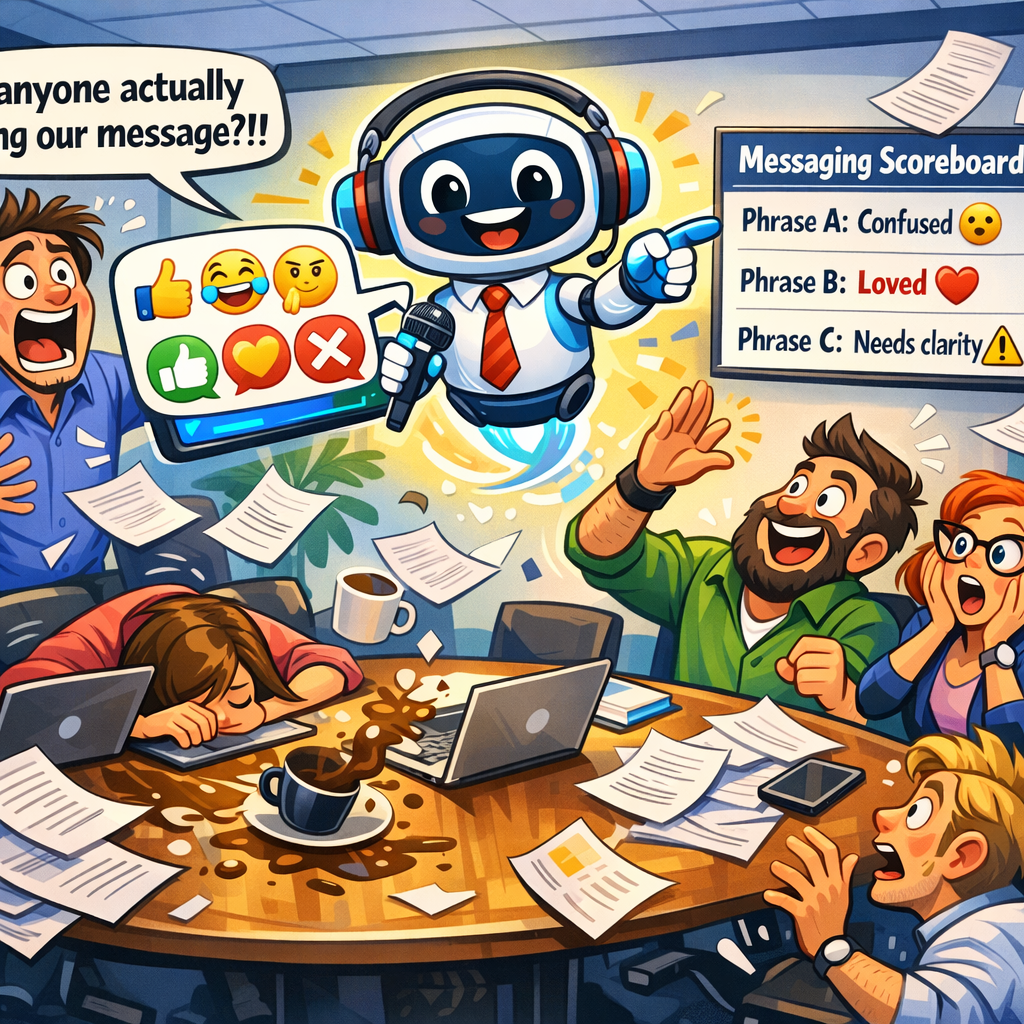
Imagine you’re in the war room. A new product launch is hours away. Marketing, sales, product, and support are clustered around screens, fingers tapping, hearts racing. The messaging — the thing you hope will resonate — hangs in the balance. One word can delight… or confuse. One tone can convert… or repel.
Now imagine if, as customers speak — in real time — your product actually listened, understood, and told you how well your messaging is landing. Not through endless surveys, not through lagging analytics dashboards, but in the raw cadence of real conversations.
This isn’t science fiction. This is the power of Voice AI for real-time message validation — where spoken customer feedback becomes an instant compass for product teams.
Let’s explore how today’s Voice AI transforms every call, demo, and feedback session into a live messaging lab — catching confusion before it becomes churn, spotting enthusiasm before it becomes a trend, and validating language before it becomes an issue.
🎙️ 1. Messaging Isn’t What We Say — Its What People Hear
Words on a slide or text on a webpage are tidy. But spoken language — the real human experience — is messy. Customers don’t recite scripts. They talk in:
- Tone
- Hesitation
- Repetition
- Interruption
- Emotion
Voice AI doesn’t just transcribe words.
It interprets meaning.
It detects nuance that humans feel, but analytics often miss.
This is crucial because what people hear often differs from what you intended to say.
🔍 2. Real-Time Sentiment & Linguistic Signals
When customers talk — whether in a call, a beta test, a support interaction, or a user feedback session — they’re not just using language. They’re revealing:
✔ Confusion about wording
✔ Negative reaction to a phrasing
✔ Positive resonance with a benefit
✔ Friction points buried in hesitation
✔ Unspoken expectation gaps
Voice AI captures these signals in real time by analyzing:
- Prosody (tone and emphasis)
- Pitch variation
- Speech tempo
- Emotional markers
- Intent strength
Suddenly, product teams don’t just guess how messaging performs.
They measure it in sentiment curves and tone shifts.
🚦 3. Instant Feedback Loops — No Waiting for Reports
Traditional messaging validation means:
- Surveys
- Focus groups
- A/B tests
- Post-launch analysis
All of which take days, weeks, or quarters to produce results.
Voice AI flips the script.
Imagine a launch call. As customers respond to positioning:
- Tooltips
- Pricing tiers
- Value statements
- Feature names
…the AI listens, scores reaction, and surfaces early indicators of resonance or resistance.
Product teams get alerts like:
“Statement X triggered hesitation in 35% of calls in the last hour.”
“Phrase ‘premium benefit’ received high positive sentiment.”
“Confusion peaked around pricing explanation.”
It’s not just feedback — it’s live validation.
🧠 4. Mapping Intent to Messaging Effectiveness
Voice AI doesn’t just analyze emotional tone — it maps intent.
When a customer says:
“I’m not sure what this feature does…”
…the system doesn’t just log it. It understands:
- Confusion
- What part caused it
- Which customer segment expressed it
- How often it’s occurring
This lets product teams cross-reference:
- Messaging elements
- User intent
- Functional clarity
Call by call, phrase by phrase, teams see how language influences understanding and action.
📊 5. Dynamic Message Refinement — In Real Time
Real-time Voice AI doesn’t just collect signals — it enables refinement while the conversation is still active.
Here’s how product teams benefit:
🔁 A/B Phrase Testing During Calls
Different groups hear different wordings mid-rollout — and Voice AI tracks which resonates more.
📈 Live Sentiment Dashboards
Instant visual feedback lets teams see which parts of the script are working and which parts need rewording.
💬 Priority Alerts
Triggered when a phrase or topic consistently causes:
- hesitation
- negative sentiment
- repeated questions
- stalled progression
This turns every customer interaction into micro experiments that accelerate product messaging strategy.
🤝 6. Cross-Functional Alignment through Shared Insights
Voice analysts aren’t just for product teams. They become shared intelligence across the organization:
- Marketing teams see what language drives enthusiasm
- Sales teams know which phrases close deals
- Support teams know where confusion occurs
- Leadership sees real-time product language performance
Everyone works from the same truth — what real people actually express, not what assumptions said.
🧩 7. Detecting Subtle Friction Before It Escalates
Sometimes the biggest messaging failures aren’t explosions — they’re whispers.
A slight downturn in confidence, a pause before agreement, a repeated clarification… these are subtle signals that can predict larger issues.
Voice AI picks up:
✔ hesitation before purchase questions
✔ repeated clarifications of the same topic
✔ emotional dips during feature descriptions
Instead of fixing messaging after complaints mount, teams can course-correct mid-conversation.
That’s real agility — not reactive reporting.
📌 8. From Conversations to Product Strategy
Voice AI turns raw calls into strategic intel that shapes:
- Positioning
- Feature narratives
- Onboarding scripts
- Pricing explanations
- Support FAQs
- Release notes
- Demo scripts
- Sales training
What used to require separate feedback loops becomes an organic by-product of engagement.
Every call isn’t just a communication event —
it’s a data point in a product insight network.
🧠 9. Humanizing Data — Insight with Empathy
Numbers tell one story, but tone shapes emotion.
Consider these:
- A customer says “That’s fine.”
— Flat tone: indifference
— Bright tone: genuine agreement
— Hesitant tone: reluctant acceptance
Standard analytics sees text only.
Voice AI sees emotion, hesitations, confidence levels, and implicit intent.
This is how product teams uncover:
- hidden friction
- unexpressed needs
- rising expectations
- cultural or regional interpretation differences
Voice becomes a window into human understanding, not just a transcript.
✨ 10. The Productivity Lift You Actually Feel
At the end of the day, real-time Voice AI validation transforms working faster into working smarter.
Comparing:
Old workflow
- Launch messaging
- Wait for survey results
- Analyze weeks later
- Guess at changes
- Do next pivot
Voice-AI-assisted workflow
- Launch messaging
- See reactions instantly
- Adjust language in real time
- Track impact call by call
- Align teams instantly
The difference isn’t incremental.
It’s exponential.
🌟 The Bottom Line
Voice AI isn’t just a tool that listens —
it’s a lens that clarifies, a mirror that reflects, and a compass that guides product messaging in real time.
It turns conversations into:
✔ actionable insights
✔ emotional understanding
✔ predictive signals
✔ strategic improvements
✔ cross-team alignment
And it does so not after the fact —
but as the conversation unfolds.
When your product doesn’t just launch with language —
but learns from language —
you don’t just communicate better.
You build better. And in a world where customers talk first and decide quickly, that’s not just advantage —
that’s necessity.
