

The End of Emotional Sales Dependency
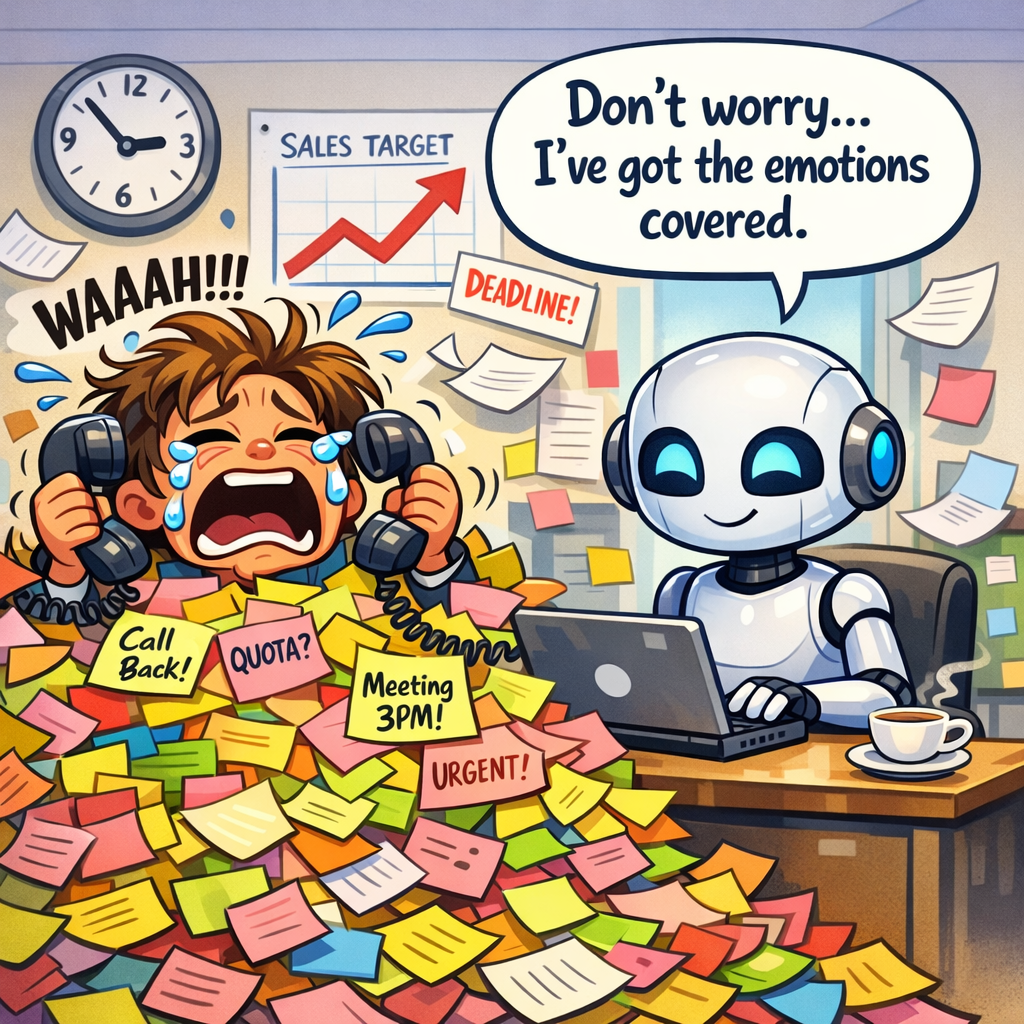
For decades, the myth of emotional sales dependency has ruled the way we think about selling.
We were taught that sales is an art — a human game of charm, charisma, gut instinct, and persuasive presence.
We believed that the best sellers were the ones who could read a room, feel their prospect’s energy, and sway decisions with personality and emotional intelligence.
But something big is happening.
That model — where sales success is built primarily on human emotion and interpersonal flair — is fading.
Not because human connection doesn’t matter anymore — it does —
but because emotional dependence in sales is no longer reliable, scalable, or predictable.
The world is moving beyond the age where you hope someone feels good enough about you to buy.
We are entering an era where clarity, structure, signal, and stability — not emotional performance — drive real, sustainable revenue.
Welcome to the end of emotional sales dependency.
Why Emotional Sales Worked — and Why It Doesn’t Work Anymore
In traditional sales psychology, emotion is the fuel:
- Warm rapport builds trust
- Enthusiasm sparks excitement
- Intuition drives timing
- Charisma closes deals
And for a long time, those things did matter.
But relying on emotion made sales fragile:
✔ A rep’s mood impacted performance
✔ Bias influenced interpretation
✔ Energy fluctuations shaped outcomes
✔ Inconsistent experiences confused customers
You could have two reps saying the same words, in the same order, and get wildly different results — simply because human emotion shifted the momentum.
Emotion added variability.
And in business, variability is risk.
Customers Don’t Want Drama — They Want Direction
People are tired of emotional sales theatrics.
They don’t want:
❌ Forced enthusiasm
❌ Over-the-top persuasion
❌ Sentimental pleasantries
❌ Pressure tactics
They want clarity.
They want alignment.
They want messaging that makes sense, timing that feels intentional, and communication that respects their time, intelligence, and logic.
Charm might capture attention.
Clarity earns commitment.
Customers don’t bond with emotion alone — they commit to certainty.
Emotion without clarity feels like noise.
Clarity without noise feels like direction.
Sales Success Shouldn’t Depend on Mood
When sales depends on emotion, you get:
- inconsistency
- unpredictability
- fluctuating quotas
- uneven forecasting
- reactive management
Imagine if every financial forecast depended on whether someone felt energetic today.
It would be chaos.
Yet for years, sales behaved as if human emotion was the engine of performance.
But that engine has limitations:
💭 Human energy dwindles
💭 Emotional signals can be misread
💭 Bias clouds interpretation
💭 Stress distorts judgment
These are not flaws in people — they are natural human traits.
But in high-performance sales environments, natural human variability becomes a bottleneck.
The New Sales Paradigm: Signal, Structure, and Predictability
Sales is evolving from emotional artistry to evidence-driven engagement.
In this new paradigm:
✔ Conversations are guided by signals, not guesswork
✔ Engagement patterns reveal intent, not personality interpretation
✔ Timing is data‑informed, not emotion‑driven
✔ Messaging adapts with context, not intuition
The result?
Sales outcomes become:
📈 More predictable
📈 More repeatable
📈 Less dependent on personality
📈 More aligned with buyer signals
📈 Less fragile under pressure
And guess what?
Customers like predictable clarity far more than unpredictable charm.
They don’t want to be persuaded emotionally — they want to be understood logically.
Emotion Still Matters but It Isn’t the Driver Anymore
This shift does not mean emotion is irrelevant.
Humans will always care about connection, authenticity, empathy, and understanding.
But emotion is no longer the core currency of sales.
Instead, emotion is now part of:
- Contextual resonance
- Meaningful alignment
- Natural engagement
- Connected clarity
Not the engine of decision — the amplifier of understanding.
In other words:
Emotion enriches the experience.
Logic and clarity drive the decision.
That’s the difference.
Real Revenue Comes From Predictable Interaction, Not Emotional Peaks
In the emotional sales model, outcomes waxed and waned with:
- individual performance
- mood swings
- improvisation
- interpretation
- personality
In the new model, outcomes follow patterns:
🔹 consistent communication
🔹 structured engagement
🔹 cue‑based timing
🔹 clarity‑first messaging
🔹 decision‑aligned sequencing
This doesn’t remove humanity — it supports it with structure.
It brings sales from:
“Will they feel one way or another?”
to
“They will understand, decide, and commit based on predictable flow.”
That’s not cold.
That’s efficient understanding.
The Future of Sales Is Not Emotional — It Is Intentional
The end of emotional sales dependency doesn’t mean sales becomes robotic or sterile.
It means:
✔ Conversations are guided by purpose, not impulse
✔ Engagement respects logic, not theatrics
✔ Buyers feel seen — not persuaded
✔ Decisions come from clarity — not pressure
The most effective interactions aren’t those that feel the strongest emotionally.
They’re the ones that:
clarify meaning, reduce friction, and guide choice with predictable precision.
Emotion used to be the compass.
Now clarity is the map.
And the result?
Sales performance that’s:
📊 Repeatable
📊 Scalable
📊 Predictable
📊 Reliable
📊 Trust‑worthy
Instead of riding the highs and lows of emotional influence, organizations are turning toward structured engagement that performs with consistency and poise.
That’s not the end of human impact.
That’s the beginning of intentional influence. And that’s the future of effective, sustainable sales.
